Quercetin and Zinc: Zelenko Treatment Protocol
⚠ Medical Disclaimer — Please Read First
This article is for educational and historical reference only and does not constitute medical advice, diagnosis, or treatment. It describes a COVID-19 outpatient protocol first proposed in 2020 by the late Dr. Vladimir Zelenko, alongside what current clinical research (through 2026) shows about each component. Hydroxychloroquine and ivermectin are prescription-relevant medicines with real drug interactions and side effects; large randomized trials completed since 2021 have not shown a meaningful treatment benefit for COVID-19 (details below), and neither drug is recommended for this use by the FDA, WHO, or NIH COVID-19 Treatment Guidelines.
Always consult a licensed physician before starting any supplement or medication regimen, especially if you are pregnant or breastfeeding, have a cardiac, kidney, or thyroid condition, or take other prescription medications. For a virtual consultation with a physician, visit The Wellness Company.
By Editorial Team | Originally published March 2021 | Last updated July 2026 | Reviewed against 2025–2026 systematic reviews and FDA/NIH treatment guidelines
QUICK ANSWER
The Zelenko Protocol pairs zinc with a "zinc ionophore" — originally hydroxychloroquine (HCQ), later also quercetin or ivermectin — on the theory that the ionophore helps zinc enter cells and slow viral replication. It was developed in 2020 by the late Dr. Vladimir Zelenko (1973–2022). As of 2026, large randomized controlled trials and systematic reviews have found that hydroxychloroquine and ivermectin do not produce a meaningful clinical benefit for COVID-19 treatment or prevention, and the FDA, WHO, and NIH do not recommend either drug for this use; HCQ also carries a cardiac arrhythmia risk. Quercetin and zinc are Generally Recognized As Safe (GRAS) supplements, and several small trials suggest a possible modest benefit as an add-on to standard care, though the evidence base remains limited. This article documents the original protocol as historical reference and reviews what the current evidence actually shows for each ingredient.
In This Article
- What Is the Zelenko Protocol?
- How Quercetin and Zinc Are Thought to Work
- 2026 Evidence Review: What Each Component Shows
- The Original Protocol, as Published (Historical Reference)
- About Dr. Vladimir Zelenko (1973–2022)
- Where Things Stand in 2026
- Frequently Asked Questions
- Personalize This Guide With AI
- Affiliate Disclosure
- References
1. What Is the Zelenko Protocol?
The Zelenko Protocol is the informal name for a COVID-19 outpatient regimen first proposed in March 2020 by Dr. Vladimir "Zev" Zelenko, a family physician who was then practicing in Kiryas Joel, New York. Its centerpiece was a three-drug combination — zinc, hydroxychloroquine (HCQ), and azithromycin — described in a retrospective case series published in the International Journal of Antimicrobial Agents (Scholz, Derwand & Zelenko, 2020).

Zelenko's underlying hypothesis was that zinc could inhibit the viral enzyme RNA polymerase inside infected cells, but zinc needs help crossing the cell membrane. Hydroxychloroquine was proposed as the "ionophore" — the transport mechanism — that carried zinc into the cell. As HCQ came under increasing regulatory and safety scrutiny through 2020–2021 (see Section 3), later versions of the protocol offered quercetin, a plant flavonoid with a similar proposed ionophore mechanism, and later still ivermectin, as alternative or additional options.
Dr. Zelenko passed away in June 2022 (see Section 5). The protocol that bears his name continued to circulate afterward through his foundation and affiliated telehealth networks, and it remains one of the most-searched COVID-19 "early treatment" protocols online. This article separates the history of the protocol from what the accumulated clinical evidence for each component now shows, so readers can make an informed decision in conversation with their own physician.
2. How Quercetin and Zinc Are Thought to Work
Zinc ionophore mechanism (Tier 3 — in vitro/mechanistic evidence). Laboratory work published in 2010 found that zinc can inhibit the RNA-dependent RNA polymerase of a related coronavirus (SARS-CoV) in cell culture once it is transported across the cell membrane (te Velthuis et al., PLoS Pathogens 2010). A separate 2014 in vitro study found that quercetin can act as a zinc ionophore, increasing zinc uptake into cells in the laboratory setting (Dabbagh-Bazarbachi et al., J. Agric. Food Chem. 2014) — the same category of mechanism proposed for hydroxychloroquine.
It's important to be precise about what this evidence does and doesn't show: both studies are laboratory (in vitro) research, not clinical trials in people with COVID-19. A cell-culture finding that a compound moves zinc across a membrane, or that zinc inhibits a related virus's polymerase in a dish, is a plausible starting hypothesis — it is not proof that a supplement changes clinical outcomes in a sick patient. Section 3 covers what happened when this hypothesis was actually tested in humans.
Quercetin is a flavonoid pigment found in onions, kale, broccoli, berries, apples, and tea, and is generally recognized as safe (GRAS) by the FDA as a dietary supplement. Foods and supplements containing quercetin are commonly discussed for their antioxidant and anti-inflammatory properties independent of any COVID-specific claim — see our related guide on choosing a quercetin supplement and the mechanism deep-dive on zinc ionophores.
3. 2026 Evidence Review: What Each Component Actually Shows
The table below uses a CEBM-style evidence tier system so you can see, at a glance, how strong the underlying evidence is for each ingredient in the protocol — this is separate from whether an ingredient is safe as a general-health supplement.
Evidence Tier Key: TIER 1 = RCT / systematic review | TIER 2 = Observational / cohort | TIER 3 = In vitro / mechanistic | TIER 4 = Expert consensus / clinical observation
Hydroxychloroquine (HCQ) — Tier 1 evidence: no demonstrated clinical benefit
HCQ has been studied in more RCTs for COVID-19 than almost any other repurposed drug. The FDA issued an Emergency Use Authorization for hospitalized patients in March 2020, then revoked it in June 2020, stating that "the totality of scientific evidence currently available indicate a lack of benefit" and citing serious cardiac arrhythmia risk[1]. The large UK RECOVERY trial (1,561 HCQ patients vs. 3,155 usual-care patients) found no reduction in mortality[2]. The NIH-funded ORCHID trial in hospitalized patients was stopped early for futility[3]. A 2022 outpatient RCT of 1,372 participants — among the largest outpatient HCQ trials conducted — likewise found no benefit in preventing progression of mild COVID-19[4]. Mayo Clinic's patient-facing guidance, last reviewed in late 2025, states plainly that hydroxychloroquine "is not recommended as a treatment for COVID-19" and does not prevent infection[5].
Ivermectin — Tier 1 evidence: no demonstrated clinical benefit
Ivermectin gained enormous public attention as a potential COVID-19 treatment from 2020–2022, but the RCT evidence has consistently failed to confirm a benefit as more and larger trials completed. A 2025 meta-analysis of RCTs concluded that, based on very-low-to-low certainty evidence, ivermectin is ineffective for both treatment and prevention of COVID-19[6]. A separate 2025 systematic review found no statistically significant improvement in mortality or recovery time and specifically advised against self-medication[7]. A 2026 meta-analysis covering trials through October 2025 — including the Omicron era — reached the same conclusion: ivermectin does not significantly reduce infection risk or improve clinical outcomes[8]. Ivermectin also carries drug-interaction risk, notably with immunosuppressants and certain antifungals.
Zinc — Tier 2/3 evidence: plausible mechanism, limited direct clinical proof
Zinc deficiency is associated with worse outcomes in several respiratory infections, and zinc lozenges have modest evidence for shortening the common cold. Its specific role in COVID-19 is less settled: most positive findings come from observational or mechanistic studies rather than large RCTs isolating zinc's independent effect. Elemental zinc above 40 mg/day for extended periods can cause copper deficiency and gastrointestinal upset, so it is not something to take indefinitely at high doses without guidance.
Quercetin — Tier 1/2 evidence: small trials show promise, evidence base still limited
Quercetin has the most encouraging (though still limited) human data of the four ingredients. A 2023 open-label RCT of 100 outpatients found that a quercetin phytosome supplement, added to standard care, was associated with faster viral clearance and symptom resolution than standard care alone[9]. A 2023 systematic review and meta-analysis reported a similar direction of benefit across the available trials[10], and a 2025 review of natural substances in COVID-19 management included quercetin among agents with some supportive clinical trial evidence[11]. That said, these are mostly small, open-label, single-country studies — a genuinely different evidence tier from a large, blinded, multi-site RCT — so "promising but unproven" is a fair characterization rather than "proven effective." Quercetin's GRAS safety profile is what distinguishes it most clearly from HCQ and ivermectin in a risk/benefit discussion.
4. The Original Protocol, as Published (Historical Reference)
Historical documentation, not a current recommendation. The dosing below reflects what Dr. Zelenko and his collaborators originally published in 2020–2021. It is reproduced here for historical and research reference. It is not updated medical guidance — see Section 3 for what more recent trials found, and talk to a physician before using any of these agents.
Prophylaxis (as originally proposed)
The original protocol stratified prevention by risk category (low, moderate, high), based on age and comorbidities. For low/moderate-risk individuals, the proposed daily regimen was:
- Zinc (elemental) 25 mg once daily
- Vitamin D3 5,000 IU once daily
- Vitamin C 1,000 mg once daily
- Quercetin 500 mg once daily
For designated high-risk patients, the originally proposed regimen substituted low-dose hydroxychloroquine plus zinc — a combination that, as detailed in Section 3, subsequent large trials did not confirm as beneficial, and which the FDA has specifically cautioned against outside a hospital or clinical trial setting due to cardiac risk[1].
Symptomatic treatment (as originally proposed)
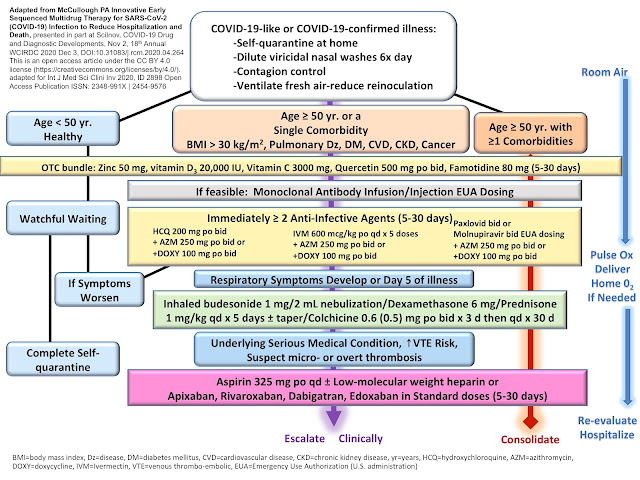
For patients already symptomatic, the original protocol likewise stratified low-risk from moderate/high-risk patients, with the higher-risk tier's regimen adding azithromycin and either hydroxychloroquine or ivermectin to zinc, vitamin C, and vitamin D3, generally for a 5–7 day course. Because the trial evidence for both HCQ and ivermectin in this use has since turned consistently negative (Section 3), we are not reproducing the specific milligram-by-milligram dosing table here; readers who want the full historical protocol text can find it archived on Dr. Zelenko's original website. If you are exploring outpatient options with a physician, ask them directly about current NIH COVID-19 Treatment Guidelines rather than a 2020-era protocol.
5. About Dr. Vladimir Zelenko (1973–2022)
Dr. Vladimir "Zev" Zelenko was born in Kyiv, Ukraine, in 1973 and immigrated with his family to Brooklyn, New York, as a child. He earned his medical degree from the State University of New York at Buffalo in 2000 and practiced family medicine in New York's Hudson Valley, serving as community physician for Kiryas Joel for close to two decades.
Zelenko rose to international attention in March 2020 after publicizing his zinc–hydroxychloroquine–azithromycin regimen, which drew the attention of the Trump White House. The approach was controversial from the outset: while some retrospective case series he co-authored reported reduced hospitalization rates, the FDA revoked HCQ's emergency authorization within months, citing a lack of demonstrated benefit and cardiac safety concerns, and the drug combination was not adopted into mainstream treatment guidelines. Zelenko subsequently left his community medical practice in 2020 amid disagreement with local leadership over his public health messaging, and went on to found Zelenko Labs and the Z Freedom Foundation.
Dr. Zelenko was diagnosed with cancer in 2018 and passed away on June 30, 2022, at age 48. His foundation and affiliated networks have continued to promote his protocols and related supplement products since his death. We note his passing here because several earlier versions of this article referred to him in the present tense as an actively practicing physician, which is no longer accurate.
6. Where Things Stand in 2026
Five-plus years on, COVID-19 has settled into a seasonal respiratory illness pattern rather than a pandemic emergency. As of mid-2026, CDC surveillance shows the XFG family ("Stratus") and NB.1.8.1 ("Nimbus") lineages circulating widely in the US, alongside a more heavily mutated variant, BA.3.2 ("Cicada"), which has been detected in dozens of states and is being monitored for immune-evasion properties[12]. Current guidance for most people with mild symptoms remains supportive care (fluids, rest, fever control) plus testing to confirm diagnosis; NIH and FDA-authorized options for higher-risk patients (e.g., Paxlovid) are discussed in our other treatment guides. Readers managing lingering post-COVID symptoms may also find our Long COVID and post-vaccine spike protein recovery guide relevant.
7. Frequently Asked Questions
Does quercetin and zinc cure or prevent COVID-19?
No supplement or drug in this protocol has been shown to "cure" COVID-19. Quercetin and zinc are safe, widely available supplements with some limited trial evidence of modest benefit as an adjunct to standard care; they are not a substitute for vaccination, antiviral medication prescribed by a physician, or emergency care for severe symptoms.
Is the Zelenko Protocol still recommended by health authorities in 2026?
No. The FDA, WHO, and NIH COVID-19 Treatment Guidelines do not recommend hydroxychloroquine or ivermectin for COVID-19 prevention or treatment. This has been consistent since 2020–2021 and has been reaffirmed by multiple systematic reviews through 2025–2026.
What happened to Dr. Vladimir Zelenko?
Dr. Zelenko died on June 30, 2022, at age 48, after a multi-year battle with cancer diagnosed in 2018. His foundation has continued his work since his death.
Is quercetin a safe alternative to hydroxychloroquine?
Quercetin has GRAS safety status and a far more benign side-effect profile than HCQ. However, "safer" is not the same as "proven equally effective" — the mechanistic case for quercetin as a zinc ionophore has not been established at the same strength as clinical evidence against HCQ's benefit. Quercetin should be used with caution in people with hypothyroidism, and TSH levels should be monitored if used long term.
Can I take quercetin and zinc together safely?
Both are commonly combined in over-the-counter supplements and are generally well tolerated at standard doses. As with any supplement regimen, check with your physician or pharmacist if you take other medications, are pregnant or breastfeeding, or have kidney, liver, or thyroid conditions.
Should I take any of these without a doctor's guidance?
For general-health-dose zinc, vitamin C, vitamin D, and quercetin, most healthy adults can discuss standard supplement doses with a pharmacist. For anything involving hydroxychloroquine, ivermectin, or azithromycin, or for any active COVID-19 illness with risk factors, involve a licensed physician — these carry real interaction and safety considerations that a general article cannot substitute for.
8. Personalize This Guide With AI
Because individual risk factors (age, medications, kidney/liver/cardiac history, pregnancy status) change what's appropriate, you can paste the relevant sections of this article into an AI assistant along with your own health context to get a more tailored starting point for a conversation with your physician — it is not a substitute for that conversation.
- Claude / ChatGPT: "Given [your age, conditions, current medications], what questions should I ask my doctor about zinc and quercetin supplementation, based on the evidence summarized in this article?"
- Gemini: "Summarize the drug interaction risks between quercetin and [your medication list]."
- Perplexity: "Find the most recent (2026) NIH COVID-19 treatment guideline recommendations for outpatients with [your risk factors]."
9. References
- FDA. Coronavirus (COVID-19) Update: FDA Revokes Emergency Use Authorization for Chloroquine and Hydroxychloroquine. June 15, 2020. fda.gov
- Horby P, et al. Effect of Hydroxychloroquine in Hospitalized Patients with Covid-19 (RECOVERY Trial). N Engl J Med. 2020.
- Self WH, et al. Effect of Hydroxychloroquine on Clinical Status at 14 Days in Hospitalized Patients With COVID-19 (ORCHID Trial). JAMA. 2020;324(21):2165-2176. Summarized: NIH Research Matters
- COPE-COALITION V Group. Hydroxychloroquine in outpatients with mild COVID-19. Lancet Reg Health Am. Discussed in: PMC9069223
- Mayo Clinic. Is hydroxychloroquine a treatment for COVID-19? Reviewed Oct 30, 2025. mayoclinic.org
- Maddukuri RK, et al. Ivermectin as a Treatment Modality in COVID-19 Patients: A Systematic Review and Meta-Analysis of Up-To-Date RCTs. Indian J Community Med. 2025;50(1):9-19. PubMed
- Ivermectin for treatment of COVID-19: a systematic review and meta-analysis. Heliyon. 2025;11(17):e44209.
- The role of ivermectin in the prevention and treatment of SARS-CoV-2 infection: a meta-analysis of RCTs. BMC Infect Dis. 2026. Springer
- Di Pierro F, et al. Quercetin as a possible complementary agent for early-stage COVID-19: concluding results of a randomized clinical trial. Front Pharmacol. 2023;13:1096853.
- Quercetin for the treatment of COVID-19 patients: a systematic review and meta-analysis. Rev Med Virol. 2023;33:e2427.
- Natural Substances in the Management of Coronavirus Disease 2019 Infection. J Integr Complement Med. 2025.
- CDC. Variants and Genomic Surveillance / Current Epidemic Trends. Accessed July 2026. cdc.gov
- Scholz M, Derwand R, Zelenko V. COVID-19 outpatients: early risk-stratified treatment with zinc plus low-dose hydroxychloroquine and azithromycin. Int J Antimicrob Agents. 2020;56:106214.
- te Velthuis AJW, et al. Zn2+ Inhibits Coronavirus and Arterivirus RNA Polymerase Activity In Vitro. PLoS Pathog. 2010;6(11):e1001176.
- Dabbagh-Bazarbachi H, et al. Zinc ionophore activity of quercetin and epigallocatechin-gallate. J Agric Food Chem. 2014;62(32):8085-93.





NAC works pretty well for post-covid.
ReplyDeleteThank you for everything you are doing for us mere plebs. I am trying to follow your protocol and have some success. My question to you...I bought Vitamin D3 and it is measured in 500ME... I am in Russia. How do I convert this to mg's???
ReplyDeleteThank You so very much for everything..
ReplyDeleteCan you take the Protocol AFTER the vaccine for detoxification?
ReplyDeleteThis comment has been removed by the author.
DeletePlease refer to Treatment for Post Vaccine protocol
Delete