Posts

Showing posts from December, 2025

Front Line Doctors Ivermectin Protocol for Prevention and Treatment of COVID-19 (2025)
Image
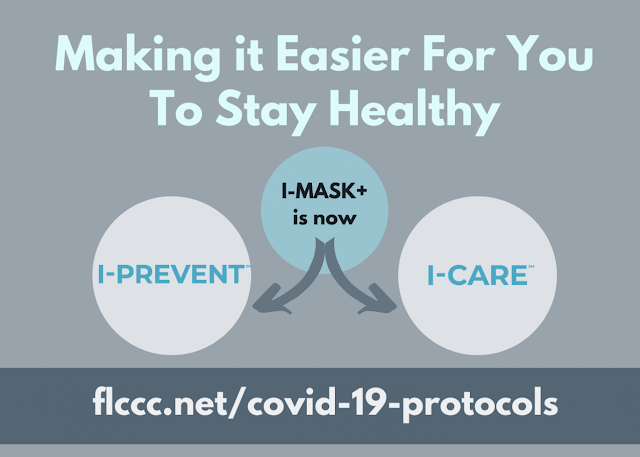
The Front Line COVID-19 Critical Care (FLCCC*) Alliance was initially formed as a working group during the early COVID-19 pandemic days in response to multiple early reports of COVID patients with an inexplicably high need for prolonged mechanical ventilation and an excessive death rate.  *The FLCCC Alliance is now the  Independent Medical Alliance Based on rapidly emerging clinical trials evidence, the FLCCC team has developed the   I-MASK+ protocol   ( is now divided into I-Prevent and I-Care protocols ) for prophylaxis and at home treatment of early stage COVID-19. Quercetin, zinc and a number of nutrients and drugs are part of this protocol, not only for critical care but also for prophylaxis and mild disease being treated at home. This article, we will dive deeper to provide the scientific background, related references and rationale of the FLCCC protocols. December 2025 Update: The Stratus Variant (XFG): Symptoms, Global Spread, and Impact in Late 2025 FLCCC ( ...

COVID Stratus Variant (XFG) Symptoms and Impact in Late 2025

Image
The Stratus variant, scientifically designated as XFG, is a sublineage of the Omicron family of SARS-CoV-2 (the virus causing COVID-19). The XFG strain is a hybrid of two other Omicron sub variants: LF.7 and LP.8.1.2. For the four-week period ending December 20, 2025 ( CDC.gov ), the dominant variant nationwide is XFG, with 61% of cases, followed by XFG.14.1, with 15% of cases, and XFG.1, with 5% of cases. Currently subvariants of omicron are circulating, including XFV, NW.1 and XFZ." It was first detected in Southeast Asia in January 2025 and classified by the World Health Organization (WHO) as a Variant Under Monitoring (VUM) on June 25, 2025. XFG is characterized by specific genetic mutations, including JF1 + S:T22N, S:S31P, S:R190S, S:R346T, S:K444R, S:V445R, S:F456L, S:N487D, S:Q493E, and S:T572I, which contribute to its increased transmissibility compared to some prior Omicron subvariants. As of late 2025, WHO assessments consistently rate the global public health risk from ...

Breakthrough Brain Training Shows Promise for Long COVID Recovery (2025)

Image
Eight out of 10 adults struggling with long COVID symptoms were able to return to work after using a targeted brain rehabilitation program (1). Zero in the standard care group did. For millions of people, long COVID doesn’t just mean lingering cough or fatigue. It includes a kind of cognitive breakdown that affects focus, memory and decision-making. It’s often called brain fog, but that term barely captures how disruptive it can be. Daily tasks become overwhelming. Conversations don’t stick. Productivity drops. And in many cases, people simply can't return to the work or life they once managed with ease. While most headlines have focused on prevention and acute care, the longer-term damage has gone largely unaddressed. That includes the neurological fallout, which is often invisible but deeply impairing. The scale is huge: Roughly 9 million to 10 million Americans are still reporting long COVID symptoms, and nearly 1 in 7 say they’re unable to return to work even three months after...

Labels

Show more

Archive

Show more