FLCCC I-PREVENT COVID, Flu & RSV Prevention Protocol: Evidence Review & 2026 Update
Quick Answer
I-PREVENT is a pre- and post-exposure prevention protocol published by the Independent Medical Alliance (formerly the FLCCC), pairing common-sense measures with supplements — vitamin D, C, zinc, melatonin, elderberry, quercetin — and, more controversially, ivermectin and hydroxychloroquine. Vitamin D correction has genuine randomized-trial support for reducing respiratory infections, particularly in people who are deficient. Ivermectin does not: the largest and most recent synthesis of evidence, a 2026 meta-analysis of 40 randomized trials in over 23,000 people, found no statistically significant reduction in infection risk from prophylaxis and no meaningful treatment benefit — a conclusion shared by the FDA, WHO, and IDSA. Ivermectin and hydroxychloroquine are not FDA-approved for COVID-19; either should only be used, if at all, in consultation with a licensed physician.
On This Page
- What Is I-PREVENT, and Who Publishes It
- Evidence Tier Key
- Pre-Exposure Protocol (Long-Term)
- Vitamin D: Dosing and Repletion
- Post-Exposure Protocol (Short-Term)
- Ivermectin: Dosing, Evidence & Legal Status
- How I-PREVENT Compares to CDC/WHO Guidance
- Safety, Interactions & Who Should Avoid This Protocol
- Frequently Asked Questions
- Ask an AI Assistant About This Protocol
- Bottom Line
- Medical Disclaimer & Affiliate Disclosure
- References
What Is I-PREVENT, and Who Publishes It
I-PREVENT was first released in 2020–2021 by the Front Line COVID-19 Critical Care Alliance (FLCCC), a group founded by critical-care physicians Dr. Paul Marik and Dr. Pierre Kory. The organization has since renamed itself the Independent Medical Alliance (IMA). In fall 2022, amid rising influenza and RSV activity, the protocol was expanded to cover those viruses alongside COVID-19. The version referenced throughout this article reflects IMA's own most recent published update (December 2024).
The protocol is organized into two parts: a pre-exposure regimen intended for ongoing, long-term use, and a post-exposure regimen intended for short-term use after a known exposure or a positive test. Both are meant to be layered on top of, not substituted for, "common sense public health actions" — hand hygiene, ventilation, and avoiding crowded indoor gatherings during high-transmission periods.
As of September 2026, the SARS-CoV-2 lineages driving most U.S. cases are SW.2, XFG.1.1 ("Stratus"), and RW.1.1 — all descendants of Omicron.[1] Updated 2026–2027 COVID-19 vaccines targeting the XFG lineage received FDA approval, though with narrowed eligibility compared to prior seasons.[2] None of this changes the underlying evidence questions below, but it's the backdrop against which "prevention" is being asked about this fall.
Evidence Tier Key
Each intervention below is tagged with a CEBM-style evidence tier so you can see at a glance how well-supported it actually is, independent of how confidently it's described in the source protocol.
Randomized controlled trial / systematic review
Observational / cohort study
In vitro / mechanistic evidence
Expert consensus / clinical observation
Pre-Exposure Protocol (Long-Term)
The table below reflects I-PREVENT's published pre-exposure recommendations, with an evidence tier and brief context added for each item. Dosing is attributed to the source protocol, not to this article's editorial recommendation — talk to a physician before starting any of these, especially in combination.
| Intervention | Per I-PREVENT | Tier | Evidence context |
|---|---|---|---|
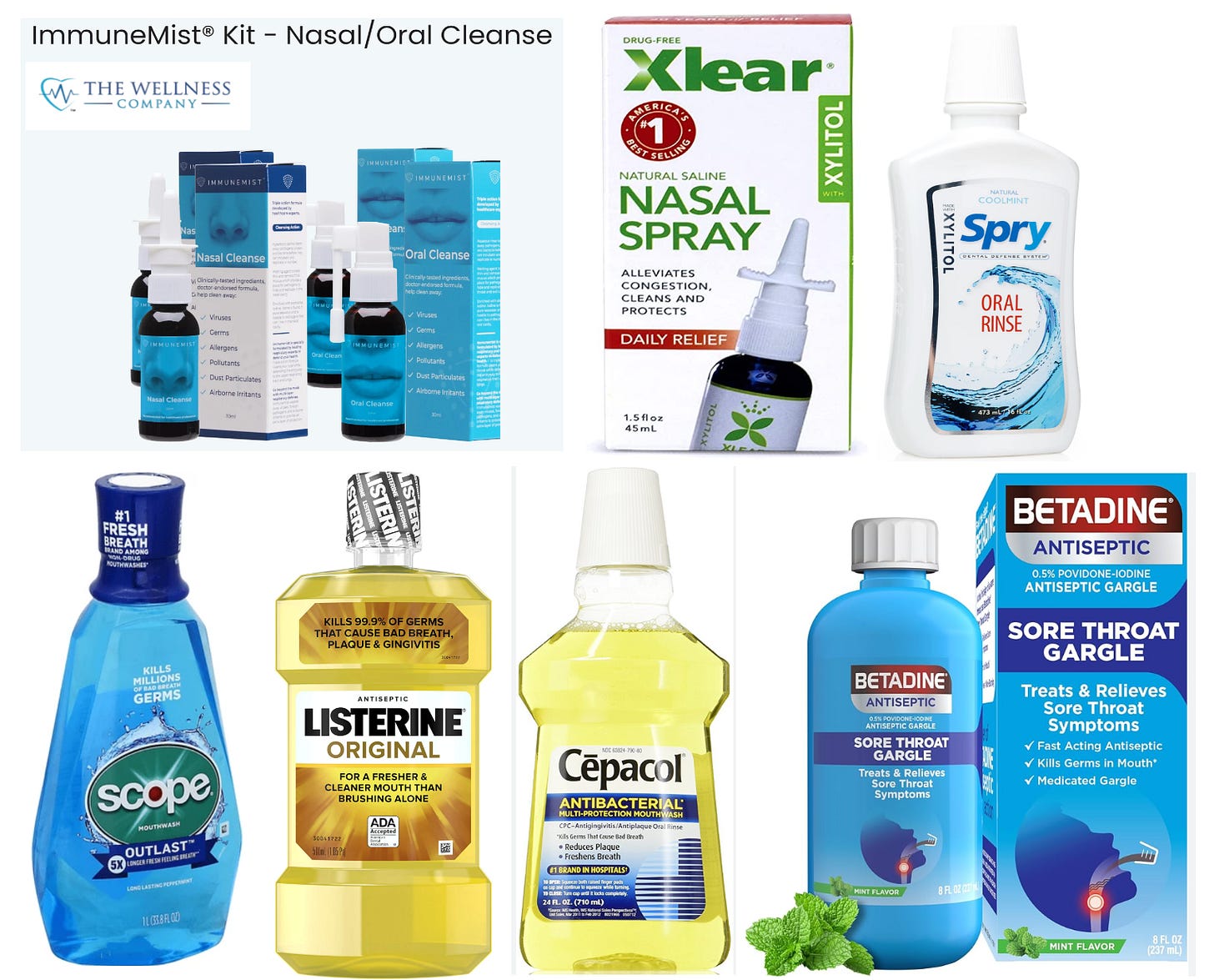
| Antiseptic mouthwash/gargle | Twice daily (chlorhexidine, povidone-iodine, cetylpyridinium chloride, or eucalyptus/menthol/thymol); do not swallow | Tier 2 | Reduces oropharyngeal viral load in small trials of already-infected people; pre-exposure prevention data is limited. Chronic daily mouthwash use has been associated in some research with shifts in the oral microbiome; short-term, intermittent use is the more conservative approach. |
| Vitamin D | Individualized to reach serum 25(OH)D > 50 ng/mL — see dedicated section below | Tier 1 | Best-supported item in the protocol; benefit concentrated in deficient individuals using daily/weekly (not bolus) dosing. See Vitamin D section. |
| Vitamin C | 500 mg twice daily | Tier 4 | Long-studied for colds generally; trial evidence shows no reliable reduction in infection incidence in the general population, with a modest effect on symptom duration/severity once ill. |
| Zinc | 20–50 mg/day | Tier 3 | Better evidence for shortening cold duration when started within 24 hours of symptom onset than for preventing infection outright. |
| Melatonin | 1–6 mg nightly (slow/extended release), titrated from a lower starting dose | Tier 3 | Anti-inflammatory/antioxidant rationale from mechanistic and observational data; not established via dedicated COVID-prevention RCTs. Causes drowsiness; vivid dreams in some users. |
| Elderberry syrup/supplement | Per manufacturer dosing, during high-transmission periods | Tier 2 | Modest RCT evidence for reducing upper-respiratory/flu symptom duration and severity; less specific data for COVID-19 prevention. Its immune-stimulating action means people with autoimmune disease should limit continuous use and watch for symptom flares. |
| Quercetin, resveratrol, or a combination flavonoid | 400–500 mg daily | Tier 3 | Supported mainly by in vitro/mechanistic work and a few small, open-label early-treatment trials; no dedicated prevention RCTs identified. Avoid in pregnancy; the protocol advises staggering from ivermectin (morning/night) due to a possible interaction. |
| Coffee | 1–2 cups/day, caffeinated or decaf | Tier 4 | Weak observational/mechanistic rationale (antioxidant polyphenols); not established as an infection-prevention measure. |
| Ivermectin | Situational — see dedicated section | Tier 1 (null result) | The largest recent RCT synthesis found no significant preventive effect. See Ivermectin section for detail and current legal status. |
Vitamin D: Dosing and Repletion
Vitamin D is the one pre-exposure item with real trial weight behind it, though the size of the effect is more modest than advocates sometimes suggest. A 2017 individual-participant-data meta-analysis pooling 25 randomized trials (11,321 participants) found supplementation reduced the odds of an acute respiratory infection by roughly 12% overall (adjusted odds ratio 0.88), with the clearest benefit in people who were deficient at baseline and who received daily or weekly, rather than large infrequent bolus, dosing.[3] A larger 2022 meta-analysis of 30 RCTs (30,263 participants) found a smaller, non-significant effect overall (relative risk 0.96), but again saw a significant benefit in the daily-dosing subgroup (relative risk 0.83).[4] In short: correcting a real deficiency, gradually and consistently, has better support than aiming for very high blood levels via large bolus doses.
Rather than reproduce I-PREVENT's proprietary loading-dose chart, here is a generalized, standard repletion framework consistent with widely used endocrinology guidance — always adjusted by an actual clinician based on your baseline serum level, body weight, and health history:
| Baseline 25(OH)D | Typical loading approach | Typical maintenance dose |
|---|---|---|
| Severely deficient (<12 ng/mL) | ~50,000 IU once weekly for 6–8 weeks (physician-supervised) | 1,500–2,000 IU/day, reassessed at 3 months |
| Deficient (12–20 ng/mL) | ~50,000 IU every other week for 6–8 weeks, or physician-directed equivalent | 1,000–2,000 IU/day |
| Insufficient (20–30 ng/mL) | Often maintenance dosing alone is sufficient | 800–1,000 IU/day |
| Sufficient (>30 ng/mL) | No loading needed | 600–800 IU/day for maintenance |
Doses need adjustment for body weight, obesity, malabsorption, chronic kidney disease, granulomatous disease, and certain medications. Get a baseline 25(OH)D test and recheck after repletion rather than dosing blind — sustained high-dose vitamin D without monitoring carries a real risk of hypercalcemia.
Post-Exposure Protocol (Short-Term)
I-PREVENT's post-exposure regimen is meant for the days following a known exposure (e.g., a COVID-positive household member) or the onset of symptoms, and generally uses higher doses over a shorter window than the pre-exposure regimen.
| Intervention | Per I-PREVENT | Tier | Evidence context |
|---|---|---|---|
| Nasal spray + oropharyngeal mouthwash | 2–3 times daily; nasal spray with 1% povidone-iodine, plus an antiseptic mouthwash | Tier 2 | Small randomized and pilot trials show reduced nasopharyngeal viral titers and somewhat shorter infectious periods in people already infected;[5][6] data on preventing infection in exposed-but-not-yet-infected people is thinner and mostly open-label. |
| Elderberry (higher dose) | 4x daily per manufacturer directions, for 1 week | Tier 2 | Same evidence base as pre-exposure use, applied over a shorter, higher-dose window. |
| Vitamin C (higher dose) | 500–1000 mg four times daily for 1 week | Tier 4 | As above; modest support for symptom duration, not for blocking infection. |
| Elemental zinc (higher dose) | 50–90 mg/day for 1 week | Tier 3 | Doses in this range approach the upper tolerable limit; prolonged high-dose zinc can cause copper deficiency and GI upset. |
| Melatonin (higher dose) | 2–5 mg at night | Tier 3 | Same rationale as pre-exposure use. |
| Resveratrol/flavonoid combination | 500 mg twice daily | Tier 3 | Same evidence base as pre-exposure quercetin/resveratrol use. |
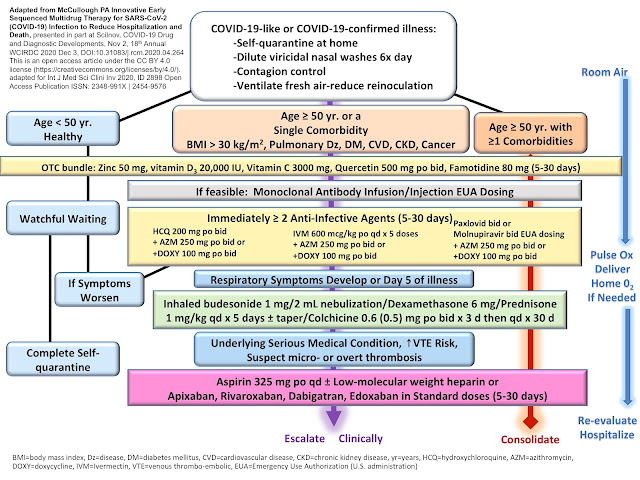
| Ivermectin (optional, with positive test) | 0.4 mg/kg immediately, repeat at 24 hours, plus hydroxychloroquine OR nitazoxanide | Tier 1 (null for ivermectin & HCQ) | Large RCTs of both ivermectin and hydroxychloroquine (including the RECOVERY and WHO Solidarity trials for HCQ) have not shown meaningful clinical benefit for COVID-19. Nitazoxanide has more mixed, smaller-scale early-treatment data and is not established standard of care. |
Ivermectin: Dosing, Evidence & Legal Status
Because ivermectin is the most debated element of I-PREVENT, it gets its own section.
What the protocol recommends
IMA's current guidance no longer recommends routine chronic (weekly/twice-weekly) ivermectin prophylaxis for most people, citing widespread prior infection and less severe circulating variants. It instead frames ivermectin as a situational option — for people with significant comorbidities and low prior immune exposure, during high-risk travel or events, or immediately at first symptoms — always described as a decision to make with a treating provider. Dosing referenced in the protocol runs from roughly 0.2 mg/kg (prevention) to 0.4 mg/kg (treatment-dose), with the exact regimen varying by indication and body weight.
What the trial evidence actually shows
The most rigorous and up-to-date synthesis is a March 2026 meta-analysis in BMC Infectious Diseases, pooling 40 randomized controlled trials and 23,243 participants through October 2025.[7] Its findings:
- Prevention: 4 trials; no statistically significant reduction in SARS-CoV-2 infection risk (risk ratio 0.37, 95% CI 0.12–1.20) — a wide confidence interval reflecting how few and small the prevention-specific trials are.
- Treatment: 36 trials; no significant reduction in all-cause mortality for hospitalized patients (RR 0.94) or outpatients (RR 0.88), and no significant effect on hospitalization length, viral clearance time, ICU admission, or need for mechanical ventilation.
- Safety: no significant difference in adverse events versus control in either setting.
The authors also point to a mechanistic explanation for why ivermectin looked promising in lab dishes but hasn't translated clinically: its antiviral activity in cell-culture studies appears to reflect non-specific membrane effects and assay artifacts rather than genuine, targeted inhibition of the virus, and achieving the concentrations that showed activity in vitro would require doses well above what's safe in humans.[8]
Older, smaller meta-analyses — some pooling as few as 3 trials and 738 participants — had reported much larger apparent protective effects for prophylaxis.[9] Those numbers still circulate widely, but they reflect an early, thin, and lower-quality slice of the evidence base that the larger 2023–2025 trial data has not confirmed.
Current U.S. legal status (2026)
Ivermectin remains, federally, a prescription-only medication approved for specific parasitic infections (strongyloidiasis, onchocerciasis) and topical use for head lice/rosacea — it is not FDA-approved for COVID-19 in any form.[10] Since 2025, a growing patchwork of states has loosened access at the state level: Arkansas, Idaho, Louisiana, Tennessee, and Texas allow pharmacist-dispensed or over-the-counter sale without a prescription, and South Carolina and Florida have pending or newly effective legislation doing the same.[11] These laws change who can buy the drug and how easily — they are not new efficacy findings, and the FDA's underlying assessment of the COVID-19 evidence has not changed.
If you and your physician decide ivermectin is appropriate for an approved indication or as an informed off-label choice, only FDA-approved human formulations should ever be used — veterinary products are not tested or dosed for human safety.
How I-PREVENT Compares to CDC/WHO Guidance
| Measure | I-PREVENT | CDC/WHO mainstream guidance |
|---|---|---|
| Vaccination | Not part of the protocol | Central recommendation; 2026–2027 XFG-targeted vaccines available |
| Vitamin D | Central pre-exposure recommendation | Not a formal recommendation, though correcting deficiency is uncontroversial general health advice |
| Hygiene/ventilation/masking | Explicitly included as a baseline layer | Core recommendation, especially during high-transmission periods |
| Early antivirals (Paxlovid, Xocova, oseltamivir) | Not featured; nitazoxanide/HCQ/ivermectin used instead | First-line recommendation for eligible higher-risk patients, started early |
| Ivermectin / hydroxychloroquine | Included as situational options | Not recommended outside clinical trials |
The overlap is real — vitamin D correction and basic hygiene/ventilation measures sit comfortably within mainstream preventive medicine. The clearest divergence is the protocol's reliance on repurposed antiparasitic and antimalarial drugs in place of, rather than alongside, guideline-recommended antivirals for higher-risk patients.
Safety, Interactions & Who Should Avoid This Protocol
- Resveratrol, quercetin, pterostilbene: avoid in pregnancy; safety in pregnancy has not been established.
- Quercetin + ivermectin: the protocol advises staggering doses (morning/night) due to a possible interaction.
- Melatonin: causes drowsiness; some people experience vivid or disturbing dreams, particularly at higher doses.
- High-dose zinc: sustained intake above roughly 40 mg/day risks copper deficiency and GI side effects.
- Chronic antiseptic mouthwash: may cause temporary tooth staining; some research links chronic use to shifts in oral/gut microbial populations, which is why the protocol itself suggests short-term rather than indefinite daily use.
- Ivermectin: is metabolized via CYP3A4 and can interact with other drugs that use the same pathway; high doses carry real toxicity risk, and only human-labeled formulations should ever be used.
- Elderberry: its immune-stimulating effect means people with autoimmune conditions should use it for limited periods and watch for symptom changes.
- Anyone on anticoagulants, pregnant or breastfeeding, with a bleeding disorder, or with significant kidney/liver disease should review this entire protocol with a physician before starting anything on it, not just the ivermectin.
Frequently Asked Questions
What is the FLCCC I-PREVENT protocol?
I-PREVENT is a supplement- and medication-based prevention protocol first published in 2020–2021 by the Front Line COVID-19 Critical Care Alliance, now the Independent Medical Alliance (IMA). It sets out pre-exposure (long-term) and post-exposure (short-term) regimens meant to lower the risk and severity of COVID-19, influenza, RSV, and the common cold, layered on top of standard hygiene measures.
Does ivermectin actually prevent COVID-19?
The most comprehensive recent evidence — a 2026 meta-analysis of 40 randomized trials in over 23,000 people — found no statistically significant reduction in infection risk from prophylaxis and no meaningful treatment benefit. Earlier, much smaller analyses reported larger effects, but those have not held up as the trial base has grown.
Is ivermectin legal to buy over the counter in the U.S.?
Not nationwide. It's federally prescription-only and not FDA-approved for COVID-19. A handful of states (Arkansas, Idaho, Louisiana, Tennessee, Texas, with South Carolina and Florida following) now allow pharmacist-dispensed or OTC-style purchase without a prescription; most states still require one.
What does the evidence say about vitamin D and respiratory infections?
It's the best-supported item in the protocol. Large randomized-trial meta-analyses show a modest protective effect, concentrated in people who are deficient and use daily/weekly rather than bolus dosing. Testing and correcting a genuine deficiency with a physician is reasonable; chasing very high blood levels through unsupervised megadosing is not.
Is gargling with antiseptic mouthwash or using nasal sprays proven to prevent COVID-19?
These reduce viral load in the nose and throat and may shorten how long an infected person stays infectious, per small trials. Evidence they prevent infection before exposure is thinner and mostly comes from small, open-label studies.
What should I do if I've been exposed to COVID-19, flu, or RSV?
Mainstream guidance: monitor for symptoms, test, mask around others, ventilate indoor spaces, and — for COVID-19 or flu — talk to a doctor promptly about antiviral treatment if you're at higher risk, since these work best started early. Any decision to add ivermectin or hydroxychloroquine belongs in that same conversation with a physician.
Do the FDA, WHO, or CDC endorse I-PREVENT?
No. The FDA, WHO, and IDSA specifically advise against ivermectin and hydroxychloroquine for COVID-19 outside clinical trials. Vitamin D testing and general hygiene measures overlap with mainstream advice; the repurposed-drug elements do not.
Where can I find a doctor who will discuss this protocol?
IMA maintains its own telehealth provider directory, and OneDayMD publishes a directory of clinicians and telehealth services, including The Wellness Company, offering consultations on early-treatment and prevention protocols. Use one of these to get individualized guidance rather than self-dosing from this article.
Ask an AI Assistant About This Protocol
If you use an AI assistant to help think through prevention strategy for your own situation, here are ways to ask that will get you a more useful, personalized answer than a generic summary of this page. None of these replace an actual physician who knows your health history.
Claude
Try: "Given [your age, conditions, and medications], which parts of a vitamin D / zinc / general respiratory-prevention routine are reasonable for me, and what should I ask my doctor about before adding anything else?" Claude is well-suited to walking through evidence tiers and interaction checks step by step.
ChatGPT
Try: "Compare the RCT evidence for vitamin D vs. ivermectin in COVID-19 prevention and summarize the confidence intervals." Good for quick side-by-side evidence comparisons.
Gemini
Try: "Search for the most recent (2026) meta-analyses on ivermectin for COVID-19 prevention and summarize what's changed since 2021." Useful for pulling in very recent search-grounded updates.
Perplexity
Try: "What is the current FDA and WHO position on ivermectin for COVID-19, with sources?" Strong for citation-heavy regulatory questions.
Bottom Line
- Vitamin D correction (tested, not guessed) and basic hygiene/ventilation are the parts of I-PREVENT with real trial support.
- Zinc, elderberry, and nasal/oral antiseptics have modest, mostly treatment-context (not prevention-context) evidence.
- Quercetin, resveratrol, melatonin, and coffee rest mainly on mechanistic reasoning, not dedicated prevention trials.
- Ivermectin and hydroxychloroquine lack RCT support for COVID-19 prevention or treatment as of the most recent (2026) evidence synthesis, and are not FDA-, WHO-, or IDSA-recommended for this use.
- State-level OTC ivermectin laws are about legal access, not new proof of benefit.
- Anyone considering the more medically significant parts of this protocol should do so with a physician who can weigh their specific health history.
Medical Disclaimer: This article is for educational purposes only and does not constitute medical advice, diagnosis, or treatment. It describes and evaluates a third-party protocol (I-PREVENT, published by the Independent Medical Alliance/FLCCC); inclusion here is not an endorsement of any specific dose or drug. Always consult a licensed physician before starting, stopping, or combining any supplement or medication, particularly if you are pregnant or breastfeeding, have a bleeding disorder, take other medications, or have a chronic health condition. See IMA's full disclaimer for their protocol specifically.
Affiliate Disclosure: This article contains Amazon Associates affiliate links (tag: df2021-20) and may reference The Wellness Company's telehealth services (referral code: ONEDAYMD). We may earn a commission on qualifying purchases or referrals made through these links, at no additional cost to you. Product and provider mentions reflect editorial judgment, not payment for placement.
References
- Nebraska Medicine. "What COVID-19 Variants Are Going Around in September 2026?"
- Hoodline. FDA approval of updated 2026–2027 XFG-targeted COVID-19 vaccines , September 2026.
- Martineau AR, et al. "Vitamin D Supplementation to Prevent Acute Respiratory Tract Infections: Systematic Review and Meta-Analysis of Individual Participant Data." BMJ, 2017.
- "Efficacy of Vitamin D Supplements in Prevention of Acute Respiratory Infection: A Meta-Analysis for Randomized Controlled Trials." 2022.
- Alsaleh S, et al. "Efficacy of Povidone-Iodine Nasal Rinse and Mouth Wash in COVID-19 Management: A Prospective, Randomized Pilot Clinical Trial." BMC Infectious Diseases, 2024.
- Elsersy HE, et al. "Combined Nasal, Oropharyngeal Povidone Iodine Plus Glycyrrhizic Acid Sprays, Accelerate Clinical and Laboratory Recovery and Reduces Household Transmission of SARS-CoV-2." Frontiers in Medicine, 2022.
- Wang X, Meng J, et al. "The Role of Ivermectin in the Prevention and Treatment of SARS-CoV-2 Infection: A Meta-Analysis of Randomized Controlled Trials." BMC Infectious Diseases, 2026.
- Eastman RT, et al. "Membrane Perturbations and Assay Interferences by Ivermectin Explain Its In Vitro SARS-CoV-2 Antiviral Activities and Lack of Translatability." Journal of Medicinal Chemistry, 2025.
- Bryant A, et al. "Ivermectin for Prevention and Treatment of COVID-19 Infection: A Systematic Review, Meta-analysis, and Trial Sequential Analysis to Inform Clinical Guidelines." American Journal of Therapeutics, 2021.
- CNN. "Ivermectin Is Now Available Over the Counter in Some U.S. States. What Is It Used For?" April 2025.
- Pharmacy Times. "Four States Pass Laws Allowing OTC Ivermectin, More States Pending Legislation."
- Independent Medical Alliance. I-PREVENT Protocol, December 2024 update (PDF) .




.png)
Comments
Post a Comment