Cold and Flu Season 2026–2027: Symptoms, Prevention, Treatment and the Oseltamivir Paradigm Shift
Contents
- Why cold and flu season matters
- Cold vs flu: what is the difference?
- Common symptoms
- Who is at higher risk?
- How to reduce your risk
- Influenza vaccination in 2026–2027
- What to do when symptoms begin
- Flu antivirals: what has changed?
- The oseltamivir paradox
- Who does the REMAP-CAP finding apply to?
- What the finding does NOT mean
- Supportive treatment and recovery
- Emergency warning signs
- Practical decision guide
- Frequently asked questions
- Sources and evidence
Why Cold and Flu Season Still Matters in 2026
Respiratory infections remain one of the most common causes of seasonal illness. But “cold and flu season” is actually a collection of overlapping respiratory-virus waves rather than a single disease season.
Influenza can range from a short, self-limited illness to pneumonia, respiratory failure, sepsis, myocarditis, neurological complications and death. Older adults, young children, pregnant people and people with certain chronic or immunocompromising conditions are at greater risk of complications.
Current public-health guidance increasingly emphasizes a layered strategy: vaccination where appropriate, cleaner indoor air, hygiene, staying home when sick, early clinical assessment for high-risk people, and timely treatment when indicated.
Cold vs Flu: What Is the Difference?
The common cold is caused by many different respiratory viruses. Influenza is caused by influenza viruses. Although the illnesses overlap, influenza more often produces an abrupt onset of systemic symptoms such as fever, chills, marked fatigue and body aches.
| Feature | Common cold | Influenza | COVID-19 |
|---|---|---|---|
| Typical onset | Usually gradual | Often abrupt | Variable |
| Fever | Less common | Common, but not universal | Common, but not universal |
| Body aches | Usually mild | Often prominent | Common |
| Fatigue | Usually mild | Often substantial | Common |
| Cough | Common | Common and may be significant | Common |
| Runny/stuffy nose | Very common | Sometimes | Common |
| Headache | Less prominent | Common | Common |
Symptoms overlap considerably. This table is a practical orientation guide, not a diagnostic test.
Influenza Symptoms: What to Expect
Influenza often begins suddenly. Typical symptoms include fever or feeling feverish, chills, cough, sore throat, runny or stuffy nose, headache, muscle or body aches and pronounced fatigue. Nausea, vomiting or diarrhea can occur, particularly in children.
Most uncomplicated influenza illness improves over several days, although cough and fatigue can persist longer.
| Symptom | What it can suggest | When to pay closer attention |
|---|---|---|
| Fever/chills | Common with influenza | Persistent, severe or returning after improvement |
| Cough | Common with influenza and other respiratory viruses | Breathing difficulty, chest pain or worsening cough |
| Body aches | Often prominent in influenza | Severe weakness or inability to function normally |
| Fatigue | Very common | Extreme weakness, confusion or deterioration |
| Vomiting/diarrhea | More common in children | Signs of dehydration |
Who Is at Higher Risk of Severe Influenza?
Most people recover without serious complications, but severe disease is more likely in certain groups.
- Adults aged 65 years and older
- Young children, particularly those younger than 5 years
- Pregnant people and those recently postpartum
- People with chronic lung, heart, metabolic or neurological conditions
- People with diabetes or other conditions associated with increased complication risk
- People who are immunocompromised
- Residents of nursing homes or long-term care settings
Higher-risk people should generally contact a healthcare professional early when influenza is suspected because treatment decisions can be time-sensitive.
How to Reduce Your Risk During Respiratory-Virus Season
There is no single prevention measure that eliminates respiratory-virus risk. The strongest strategy is layered protection.
1. Improve indoor air
Respiratory viruses can spread through infectious particles in indoor air. Opening windows where practical, improving ventilation, using appropriate air filtration and choosing outdoor settings when feasible can reduce exposure.
2. Practice good respiratory hygiene
Cover coughs and sneezes, wash hands regularly and clean frequently touched surfaces when appropriate.
3. Stay home when actively ill
Avoid unnecessary contact with others when you have respiratory symptoms. CDC guidance recommends returning to normal activities when symptoms are improving overall and you have been fever-free for at least 24 hours without using fever-reducing medication, followed by additional precautions for the next several days.
4. Consider masking in higher-risk situations
A well-fitting, more protective mask can provide another layer of protection, particularly in crowded indoor environments, during periods of high respiratory-virus circulation, or around people at increased risk of severe disease.
What to Do When Cold or Flu Symptoms Begin
Check whether symptoms are mild and stable or whether there are warning signs such as breathing difficulty, chest pain, confusion, dehydration or rapidly worsening illness.
A healthy young adult with uncomplicated symptoms has a different treatment pathway from an older adult, pregnant person, young child or immunocompromised patient.
Influenza, COVID-19 and other respiratory viruses may look similar. Testing becomes more useful when the result could influence treatment, isolation or protection of vulnerable contacts.
Antiviral treatment is most effective when started early, although the treatment decision depends on the person's clinical context and the current guideline being followed.
Improvement followed by renewed fever, worsening cough, shortness of breath or marked weakness can signal a complication and deserves reassessment.
The Oseltamivir Paradox: A Practice-Changing 2026 Signal
The most important new development in this article is the 2026 influenza antiviral result from the REMAP-CAP platform.
What was studied?
REMAP-CAP is an international adaptive randomized platform trial. The influenza antiviral domain enrolled critically ill patients aged 12 years and older with laboratory-confirmed influenza and compared oseltamivir strategies with no influenza antiviral treatment.
The attached evidence summary describes 442 critically ill participants randomized to 5 days of oseltamivir, 10 days of oseltamivir or no influenza antiviral. The primary outcome was 90-day mortality.
| REMAP-CAP finding | Result |
|---|---|
| Population | Critically ill patients aged ≥12 years with influenza |
| Primary outcome | 90-day mortality |
| Oseltamivir mortality | Approximately 19–20% |
| No-antiviral mortality | Approximately 14% |
| Adaptive analysis | Prespecified inferiority threshold crossed |
| Trial action | Recruitment to oseltamivir interventions was stopped |
The REMAP-CAP investigators report that by day 90 approximately 19.4% of critically ill participants receiving oseltamivir had died compared with 13.7% assigned to no antiviral. They report a less-than-2% probability that oseltamivir was effective and a greater-than-98% probability of harm in this population.
The result is especially important because oseltamivir had become deeply embedded in critical-care practice despite the absence, until this trial, of a direct randomized comparison against no influenza antiviral in this critically ill population.
Who Does the Oseltamivir Finding Apply To?
This is where precision matters.
The Australian Living Evidence Collaboration defines critical influenza in this context around organ dysfunction and organ support—not simply the fact that a patient happens to be physically located in an intensive-care unit.
The Australian interim recommendation currently states that oseltamivir should not be used in critically ill adults with confirmed or suspected influenza and that patients already taking oseltamivir should have it discontinued if they subsequently become critically ill.
The Australian recommendation is stated to apply even when the patient is immunocompromised, in shock, pregnant, has bacterial coinfection or has had symptoms for a short or long period.
But this is not a universal global guideline change
CDC guidance available in 2026 still recommends oseltamivir as a treatment option for many patients with severe influenza and hospitalized influenza. This creates a genuine evidence-to-guideline transition period.
In other words, the most scientifically responsible wording is not “oseltamivir is obsolete.” It is:
What the REMAP-CAP Result Does NOT Mean
| Claim | Supported by the trial? |
|---|---|
| Oseltamivir failed to improve survival in critically ill influenza patients. | Yes |
| There was a strong signal of increased 90-day mortality in the trial population. | Yes |
| Oseltamivir is harmful to every person with influenza. | No |
| Early outpatient oseltamivir is proven harmful. | No |
| Post-exposure prophylaxis has been shown to be harmful. | No |
| The result is directly proven in young children. | No |
| Another antiviral should automatically replace oseltamivir in ICU patients. | No |
This distinction is essential. The trial challenges a specific treatment strategy in a specific phenotype of influenza; it does not invalidate the entire evidence base for antiviral treatment across all stages of influenza.
Vaccine Recommendations
The CDC, with assistance from its vaccine advisory panel, usually updates vaccine recommendations regularly, including ahead of the virus season.
In January, the CDC announced a new schedule that narrowed recommendations for COVID-19 and influenza vaccination, among others.
A federal judge blocked the update, determining officials did not take proper steps before announcing it. The order has prevented the CDC’s vaccine advisers from meeting.
An appeal is ongoing.
The CDC website says that “because of legal uncertainties and inquiries,” its recommendations for influenza vaccines are for annual vaccination for all people aged 6 months and older, instead of the updated advice. Its page on COVID-19 vaccines has not been updated this year.
Federal regulators just approved new COVID-19 vaccines without human data. The CDC would normally decide which people should receive the vaccines following new approvals, absent the court order.
The CDC recommends pregnant women receive flu vaccines and RSV vaccines, but not COVID-19 vaccines.
Dr. Jane Orient, executive director of the Association of American Physicians and Surgeons, which does not accept pharmaceutical funding, said that RSV vaccines are so new that there has not been enough time to assess them.
Orient told The Epoch Times in an email that the influenza vaccine “is generally not very effective, and has a high incidence of adverse effects.”
And she said that COVID-19 vaccines also have troubling adverse reactions, and that there are effective treatments for COVID-19, such as repurposed drugs.
It is important to note that many medical organizations representing doctors receive funding, sponsorships, or donations from vaccine manufacturers and pharmaceutical companies. Such financial relationships do not necessarily imply undue influence, but they are relevant to transparency and should be considered when evaluating potential conflicts of interest.
What About Other Antivirals, Steroids and Antibiotics?
Other antivirals
A critical lesson from REMAP-CAP is that “oseltamivir failed” does not automatically mean that a different antiviral is proven beneficial.
The Australian interim guidance currently places baloxavir, peramivir and zanamivir in the context of randomized research for critically ill adults rather than recommending that clinicians simply substitute one for another.
Corticosteroids
Corticosteroids should not be used simply as an influenza-specific treatment strategy without an independent indication. A corticosteroid can still be appropriate when the patient has another established indication, such as septic shock or an acute exacerbation of a steroid-responsive disease.
Antibiotics
Antibiotics do not treat influenza viruses. However, influenza can be complicated by bacterial infection, including pneumonia. In a patient with severe disease, bacterial coinfection may need to be evaluated and treated according to clinical findings.
Supportive Treatment: The Fundamentals Still Matter
Most uncomplicated influenza is treated primarily with supportive care.
- Rest and adequate sleep
- Maintain adequate fluid intake
- Use appropriate fever and pain relief when needed and medically suitable
- Maintain nutrition as tolerated
- Use humidification or saline measures when helpful for upper-airway symptoms
- Monitor symptoms rather than simply treating the thermometer
- Protect vulnerable household members from exposure
Over-the-counter products can relieve symptoms but generally do not eliminate the underlying respiratory virus. Avoid taking multiple combination cold medicines that unknowingly contain the same active ingredient.
What about supplements?
Nutrition matters for general immune function, but supplements should not be presented as substitutes for vaccination, antiviral therapy when indicated, medical assessment or supportive care.
Correcting a genuine nutritional deficiency is different from taking very high doses of a supplement in the hope of treating an acute viral infection. Evidence for individual supplements varies substantially, and “immune boosting” claims often exceed the clinical evidence.
Emergency Warning Signs: When a Cold or Flu Becomes Urgent
Seek urgent medical assessment for symptoms suggesting respiratory failure, cardiovascular complications, neurological deterioration or significant dehydration.
Adults
- Difficulty breathing or shortness of breath
- Persistent chest or abdominal pain or pressure
- Confusion, severe dizziness or difficulty waking
- Seizures
- Very low urine output or significant dehydration
- Severe weakness or inability to stand safely
- Symptoms that improve and then return or worsen
- Worsening of an important underlying medical condition
Children
- Fast or difficult breathing
- Bluish lips or face
- Ribs pulling in with breaths
- Chest pain
- Severe muscle pain or refusal to walk
- Dehydration or prolonged absence of urination
- Not alert or not interacting normally
- Seizures
- Worsening after an initial improvement
Practical Cold-and-Flu Decision Guide for 2026
| Situation | Practical next step | Evidence / urgency |
|---|---|---|
| Mild cold-like symptoms in an otherwise healthy adult | Supportive care, rest, fluids and infection-control precautions | Usually home care |
| Flu-like illness in a high-risk patient | Contact a clinician promptly to discuss influenza testing and antiviral treatment | Time-sensitive |
| Suspected influenza with severe or progressive symptoms | Prompt medical assessment | Urgent assessment |
| Hospitalized but not critically ill | Follow the treating team's current influenza guideline and patient-specific assessment | Clinical decision |
| Critically ill influenza requiring organ support | Specialist critical-care/infectious-disease management; oseltamivir evidence now requires explicit reconsideration | Major 2026 evidence update |
| Breathing difficulty, chest pain, confusion or severe dehydration | Seek emergency medical care | Emergency |
The Most Important Lesson From REMAP-CAP
The deeper lesson is not simply about Tamiflu.
It is about how medical practice evolves.
Oseltamivir had a strong biological rationale: influenza viruses use neuraminidase to help release new viral particles from infected cells, and oseltamivir inhibits neuraminidase. Clinical studies demonstrated a modest reduction in symptom duration in uncomplicated influenza, and observational studies supported treatment of more severe disease.
Over time, the assumption became intuitive: if the drug helps influenza, the sickest influenza patients should benefit most.
REMAP-CAP tested that assumption directly in the population that mattered most—and produced the opposite signal.
This is one reason adaptive platform trials and living guidelines are potentially important for infectious diseases: evidence can move rapidly from trial data to treatment recommendations when an unexpected signal emerges.
Could Oseltamivir Actually Be Causing Harm?
The current evidence does not establish a mechanism explaining the mortality signal.
Possible explanations include differences in drug effects during advanced critical illness, differences in the timing of treatment relative to viral replication, or other biological and clinical factors. The REMAP-CAP investigators caution against treating these mechanisms as established facts.
The late stages of severe influenza can involve a complex interaction between viral injury, host inflammation, acute respiratory distress syndrome, bacterial coinfection and multiorgan dysfunction. But the current trial does not prove that any one of these processes explains the oseltamivir result.
What This Means for Patients Taking Tamiflu
A person taking prescribed oseltamivir for uncomplicated influenza should not interpret the REMAP-CAP result as evidence that the medication is dangerous for everyone.
The trial specifically addresses critically ill patients. Current guidelines still differ depending on illness severity, setting and country.
Patients should therefore not stop a prescribed antiviral solely because they read an online headline about the REMAP-CAP result.
The exception is a change in clinical status: if a patient taking oseltamivir becomes critically ill and requires organ support, the treating ICU and infectious-disease team should reassess therapy in light of the newest evidence and the guideline applicable to that setting.
The Immune Defence Study
Large-Scale Randomized Trial Provides Proof of Principle--Nasal Sprays Work on Demand but Must be Used Daily to Prevent Viral Upper Respiratory Infections Altogether.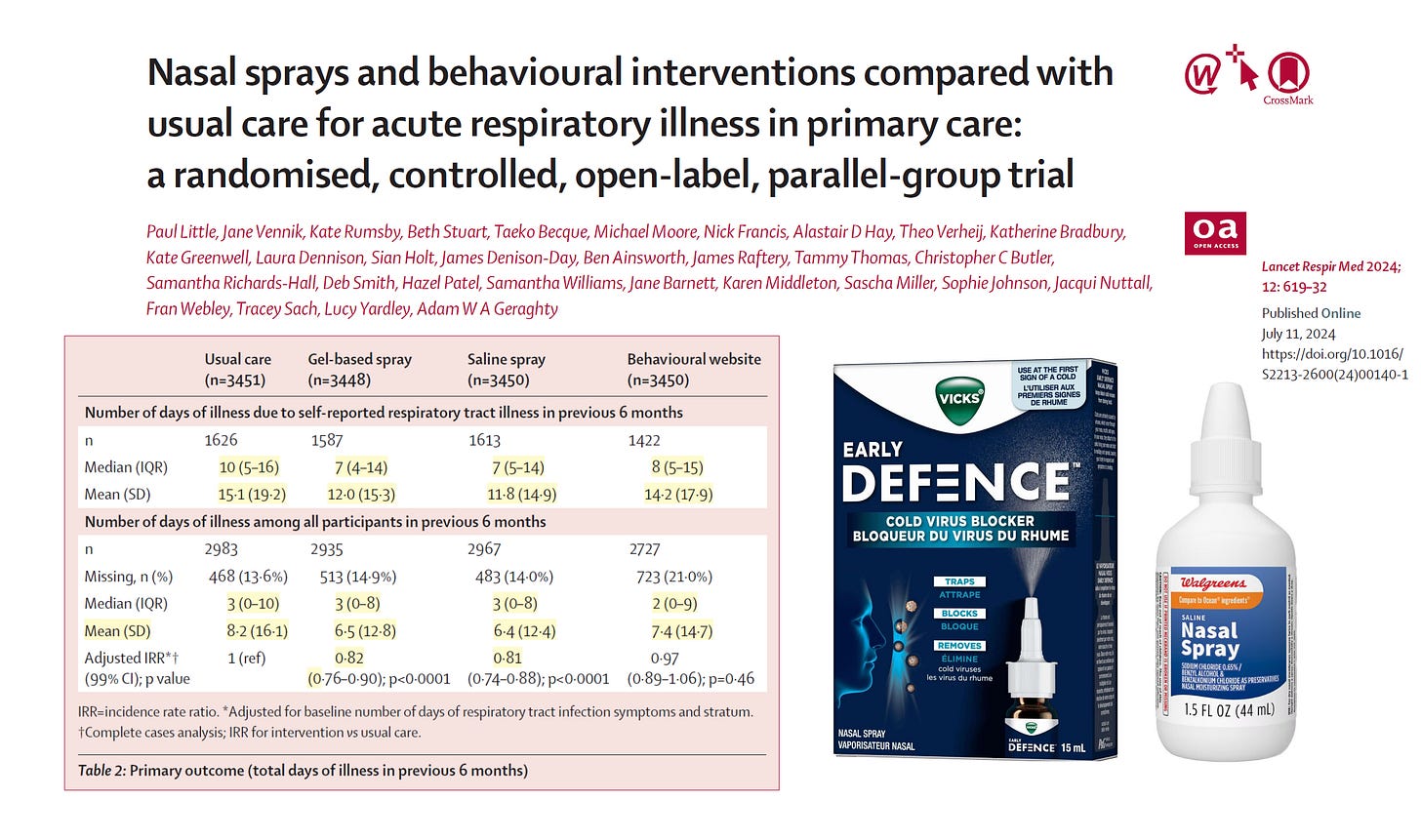
This trial found on demand use of pharmacologically inactive nasal sprays (Vicks, saline) had an impact which is very difficult to show in a randomized trial using survey data outcomes. I have found clinically it is hard to determine sick exposures and even the onset of “coming down with a cold.” Thus the rationale for routine twice daily instead of on-demand nasal sprays is very strong.

Cold and Flu Season 2026–2027: A Better Health Strategy
The strongest respiratory-health strategy is not a single medicine. It is a sequence of preventive and clinical decisions.
- Prevent infection where possible. Improve indoor air and use practical hygiene measures.
- Recognize high-risk situations early. Age, pregnancy, chronic illness and immune status matter.
- Act early when influenza is suspected in a high-risk patient. Antiviral decisions can be time-sensitive.
- Do not confuse mild influenza with critical influenza. The evidence base is not identical.
- Watch the trajectory. Deterioration after apparent improvement can be clinically important.
- Use evidence hierarchically. Randomized trial data in the relevant population deserve particular weight when they contradict established practice.
Frequently Asked Questions
Is oseltamivir still used for influenza in 2026?
Yes. Oseltamivir remains an established influenza antiviral and continues to appear in CDC treatment guidance for many patients with influenza, including hospitalized patients. However, the 2026 REMAP-CAP findings have created a major new concern specifically for critically ill patients requiring organ support, and Australian interim guidance now recommends against oseltamivir in that population.
Does the REMAP-CAP trial prove that Tamiflu is dangerous for everyone?
No. The trial studied critically ill patients with influenza. It does not prove that early outpatient oseltamivir causes harm, that prophylactic treatment is harmful, or that the same result applies to every age group or severity level.
Should I stop my Tamiflu prescription?
Do not make an individual treatment change based solely on this article. Discuss the decision with the clinician who prescribed it. The treatment context matters, particularly the severity and stage of illness.
What makes someone “critically ill” in the oseltamivir debate?
In the Australian guidance, critical illness refers to acute or imminent failure of a vital organ system requiring respiratory or haemodynamic support because of influenza. It is therefore more specific than simply being admitted to an ICU.
Can another antiviral simply replace oseltamivir?
Not automatically. The Australian interim guidance does not establish another antiviral as a proven replacement for critically ill adults. Some alternatives remain subjects of randomized research.
Sources and Evidence
- REMAP-CAP / Australian and New Zealand Intensive Care Research Centre. REMAP-CAP Oseltamivir Results Explainer .
- REMAP-CAP Trial. Results: Oseltamivir for critically ill patients with influenza infection .
- Australian Living Evidence Collaboration. Australian guideline for drug treatments for people with influenza who are critically ill .
- Centers for Disease Control and Prevention. Treating Flu with Antiviral Drugs .
- Centers for Disease Control and Prevention. Signs and Symptoms of Flu .
- Centers for Disease Control and Prevention. Preventing Respiratory Illnesses .
- Centers for Disease Control and Prevention. 2026–2027 Flu Season .
- World Health Organization. Recommendations for influenza vaccine composition for the 2026–2027 Northern Hemisphere season .
- World Health Organization. Recommended composition of influenza virus vaccines for the 2026 Southern Hemisphere season .
- World Health Organization. Clinical Practice Guidelines for Influenza .
- IDSA. Clinical Practice Guidelines for Seasonal Influenza .

|
|
Check Price on The Wellness Company
A pathogenic virus lands in the anterior nasal cavity, attaches to
hair cells and needs a stable environment where viral particles
are not washed away with mucous or fluids so they can replicate to
a point of overwhelming the system. At that juncture a sore throat
begins following by sneezing, runny nose, and cough. So there is
always a 5-7 day window before hand where a nasal spray and throat
spray or gargle approach would work to prevent an incipient
infection. By knocking down the viral load in the nasopharynx, the
body’s natural mucosal immune system can snuff out the infection
before it begins.
|
- Immune Defense Nasal Sprays (Zinc acetate, Xylitol and Erythritol)
- Immune Defense Throat Sprays (Proprietary Zinc Complex)
Evidence Note on the 2026 Oseltamivir Update
The oseltamivir section of this article incorporates the supplied 2026 REMAP-CAP evidence summary. That summary identifies the result as a pre-release/pre-peer-review finding and appropriately cautions that the biological mechanism of possible harm remains uncertain.
This article therefore uses the more conservative language “signal of harm,” “inferiority” and “critically ill population,” rather than stating that oseltamivir has been conclusively proven toxic at all stages of influenza.




Comments
Post a Comment