Long COVID in 2026: Integrative Biological Insights and Therapeutic Considerations
Abstract
Background: Long COVID, or post-acute sequelae of SARS-CoV-2 infection (PASC), continues to affect millions globally. Persistent symptoms include fatigue, cognitive impairment, dyspnea, autonomic dysfunction, and multi-organ involvement.
Objectives: To summarize the latest 2026 research on biological mechanisms, clinical features, risk factors, and treatment approaches for Long COVID.
Methods: Literature review of peer-reviewed publications, government reports, and large cohort studies from 2023–2026, using PubMed, PMC, NIH RECOVER data, and major news outlets reporting verified research.
Results: Key mechanisms identified include persistent inflammation, microvascular thrombosis, immune dysregulation, autonomic nervous system involvement, and in some patients, neurodegenerative protein elevations. Reinfection and pre-existing comorbidities are significant risk factors. Current management remains symptom-focused and multidisciplinary. No universally effective pharmacologic therapy exists, though clinical trials of antivirals, immune modulators, and anticoagulants are ongoing.
Conclusions: Long COVID is best conceptualized as a multifactorial syndrome. Hypotheses involving spike protein persistence and NAD⁺ depletion merit further investigation, but neither is sufficient alone to explain PASC. Future research should focus on stratified, mechanistic clinical trials with validated biomarkers.
Keywords: Long COVID, PASC, SARS-CoV-2, microclots, inflammation, autonomic dysfunction, neurodegeneration, treatment, spike protein, NAD⁺, nicotinamide riboside, immune dysregulation, endothelial dysfunction, nattokinase, curcumin, bromelain.

1. Introduction
Long COVID (PASC) is defined by symptoms persisting ≥3 months after initial SARS-CoV-2 infection and lasting at least 2 months without alternative explanation. Clinical presentations are heterogeneous, overlapping with ME/CFS and other post-viral syndromes. Symptoms affect multiple organ systems including cardiovascular, respiratory, neurological, and immune functions. The condition represents a major public health concern, necessitating updated understanding of pathophysiology and evidence-based clinical management.
Recent hypotheses propose that SARS-CoV-2 spike protein fragments may persist and contribute to PASC symptoms, and that metabolic cofactor pathways such as NAD⁺ may be dysregulated, potentially amenable to therapeutic modulation.
2. Methods
A comprehensive literature review was conducted using PubMed, PMC, NIH RECOVER datasets, ScienceDaily, Nature, Frontiers in Human Neuroscience, MedicalXpress, and MIMS, focusing on publications from 2023–2026. Keywords included “Long COVID,” “PASC,” “post-acute SARS-CoV-2,” “microclots,” “immune dysregulation,” “autonomic dysfunction,” and “neurological sequelae.” Selected studies were evaluated for clinical relevance, mechanistic insights, and evidence quality.
3. Pathophysiology and Biological Mechanisms
3.1 Inflammation and Immune Dysregulation
Persistent pro-inflammatory markers (IL-1β, IL-6, TNF-α) have been documented in Long COVID patients, reflecting ongoing immune activation. Dysregulated immune responses contribute to symptom heterogeneity. (ScienceDaily, 2026)
3.2 Microvascular Dysfunction and Microclots
Microclots, often fibrin-rich and associated with neutrophil extracellular traps (NETs), impair tissue perfusion, potentially underlying fatigue, brain fog, and dyspnea. (ScienceDaily, 2026)
3.3 Neurological and Autonomic Effects
Small fiber neuropathy and autonomic dysfunction are confirmed histologically in patients with pain and dysautonomia. Neuroimaging studies demonstrate region-specific brain alterations linked to cognitive impairment. (Frontiers in Human Neuroscience, 2025)
3.4 Neurodegenerative Protein Elevations
Some patients exhibit elevated Alzheimer’s-linked proteins, suggesting potential long-term neurological consequences. (MedicalXpress, 2026)
4. Clinical Features and Epidemiology
4.1 Symptoms:
Fatigue and post-exertional malaise
Cognitive dysfunction (“brain fog”)
Dyspnea, palpitations, autonomic dysfunction
Sleep disturbances, anxiety, depression
Pain syndromes and gastrointestinal symptoms
4.2 Risk Factors:
Female sex, older age
Pre-existing comorbidities (diabetes, cardiovascular disease)
-
Reinfection significantly increases risk, especially in children (MIMS, 2026)
5. Spike Protein Pathophysiology: Mechanistic Evidence and Critical Appraisal
5.1 Biological Effects of Spike Protein
The spike glycoprotein of SARS-CoV-2 mediates virus entry by binding ACE2 and facilitating membrane fusion. Experimental studies show that spike protein can:
-
Induce endothelial inflammation and dysregulation of coagulation pathways.
-
Alter mitochondrial function and increase reactive oxygen species in cardiomyocytes.
-
Promote pro-inflammatory signaling in multiple organ systems.
These effects have been documented in vitro and animal models, suggesting potential mechanisms for organ injury.
5.2 PMC10663976 — Mechanistic Review
The publication “Clinical Approach to Post-acute Sequelae After COVID-19 Infection and Vaccination” (PMC10663976) reviewed evidence on spike protein’s impact across organ systems (cardiovascular, hematological, neurological, respiratory, gastrointestinal, immunological) and proposed mechanisms by which spike protein may contribute to tissue injury. It also explored potential adjunctive detoxification strategies, including the putative role of orally administered proteolytic enzymes and anti-inflammatory compounds such as nattokinase, bromelain, and curcumin as a theoretical “base spike detoxification” protocol.
Critical Scientific Context-
The PMC10663976 review acknowledges signals from various studies that spike protein may exert deleterious effects in cell and animal models, but also clearly states that large, prospective, randomized, placebo-controlled trials are needed to determine the safety and efficacy of any proposed mitigation protocol in humans.
Small observational reports have detected spike protein fragments in plasma of some individuals months after infection; however, these findings are preliminary, vary by assay methodology, and do not confirm causation of symptoms.
5.4 Summary Interpretation
While spike protein exhibits biological activity that could plausibly contribute to cellular injury, the current evidence lacks definitive causal linkage to Long COVID in humans. Mechanistic insights should guide targeted hypothesis testing rather than be interpreted as established clinical pathogenesis.
6. NAD⁺ Metabolism and Metabolic Interventions in Long COVID
6.1 NAD⁺ Biology and Viral Stress
Nicotinamide adenine dinucleotide (NAD⁺) is essential for redox reactions, mitochondrial energy metabolism, and cellular repair pathways. Viral infection and sustained inflammation can deplete cellular NAD⁺ pools, potentially contributing to fatigue and metabolic dysregulation seen in PASC.
6.2 Nicotinamide Riboside and Supplementation Studies
A double-blind trial of high-dose nicotinamide riboside (NR) demonstrated increased NAD⁺ levels and within-participant improvements in fatigue, sleep, mood, and cognitive measures in Long COVID subjects; however, between-group differences did not achieve statistical significance, and sample size limitations constrain interpretation. (The Lancet 2025)
6.3 Interpretation of NAD⁺ Augmentation Evidence
While NR reliably increases NAD⁺ levels, current clinical evidence does not yet support routine use of NAD⁺ precursors as widely validated therapies for Long COVID. Additional larger, stratified trials are necessary.
7. Current Management and Treatment Approaches
-
Symptom-Focused Multidisciplinary Care: Rehabilitation, cognitive therapy, autonomic support, psychological support.
-
Pharmacologic Investigations:
-
Early antivirals (e.g., Paxlovid) may reduce risk if given early during acute infection.
-
Anticoagulants and immune modulators under investigation; no universally validated therapy yet.
- Nattokinase, curcumin and bromelain:
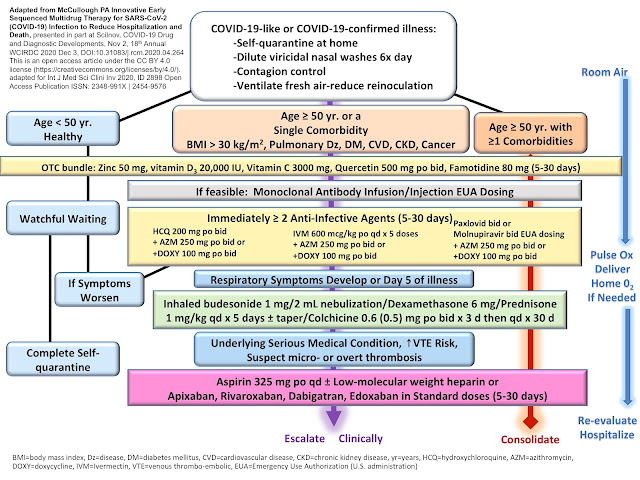
- McCullough et al. published in 2023 (Journal of American Physicians and Surgeons) the rationale for spike protein detoxification, called the McCullough Protocol Base Spike Detoxification: base spike detoxification, that holds considerable promise.
- Benefits: The protocol includes a natural triple-agent oral regimen of nattokinase, bromelain, and curcumin that provides four putative, primary mechanisms of action:
- proteolytic degradation of spike protein,
- inhibition of inflammation from spike protein and its fragments in tissues,
- dissolution of microthrombi, and
- anticoagulation.
- Recommended Dosage:
- Nattokinase 2000 FU (100 mg) twice a day
- Bromelain 500 mg once a day
- Nano/Liposomal Curcumin 500 mg twice a day
- Evidence: Hulscher et al. Cureus, 2023. (PubMed)
8. Research and Future Directions
-
Biomarker Identification: Microclots, inflammatory profiles, neurodegenerative proteins
-
Mechanistic Studies: Viral persistence, endothelial dysfunction, immune dysregulation
-
Clinical Trials: Antivirals, immunomodulators, supportive therapeutics
-
Global Funding Initiatives: NIH RECOVER, UNSW-funded studies (UNSW, 2026)
9. Conclusion
Long COVID in 2026 is best understood as a multifactorial syndrome involving immune dysregulation, microvascular pathology, autonomic dysfunction, and metabolic perturbations. Evidence supports biological effects of spike protein in experimental systems, but not universal causation in PASC. Metabolic interventions such as NAD⁺ augmentation show promise but lack definitive clinical validation. A stratified, biomarker-guided research and therapeutic approach is essential.
References
-
ScienceDaily. Long COVID may be fueled by inflammation and tiny clots. 2026. Link
-
Nature. A chronobiology-based protocol for multi-omic mapping of ME/CFS and Long COVID. 2025. Link
-
Frontiers in Human Neuroscience. Autonomic small fiber involvement in painful Long COVID. 2025. Link
-
MedicalXpress. Increased levels of Alzheimer’s-linked protein in Long COVID. 2026. Link
-
MIMS. SARS-CoV-2 reinfection increases pediatric Long COVID risk. 2026. Link
-
UNSW News. $4.7 million for Long COVID research. 2026. Link
-
WHO. Post-COVID Condition Fact Sheet. 2025. Link
-
NIH RECOVER Initiative. Yearly Research Update 2025–2026. Link


.png)



This is the kind of 2026 overview patients need, especially the caution that spike-protein signals are not the same thing as a proven single-cause explanation. For me post-COVID joint pain, fatigue crashes, and trying to rebuild a normal life made it more useful to organize the research into a framework: diet, supplements, symptom triggers, clinician questions, and natural spike protein detox as a careful research/support lane.
ReplyDelete