Posts

Povidone-Iodine for SARS-CoV-2 Nasopharyngeal Decontamination: Updated Evidence (2020–2026)

Image
Abstract Background: Povidone-iodine (PVP-I) has been proposed as a topical antiviral intervention targeting SARS-CoV-2 replication in the nasopharynx. While early pandemic recommendations were largely mechanistic, recent studies (2024–2025) provide more structured clinical evidence. Objective: To evaluate updated clinical efficacy, safety, and translational relevance of PVP-I nasal and oral applications in COVID-19. Methods: Narrative review of in vitro studies, randomized controlled trials (RCTs), and systematic reviews published between 2020 and 2025. Results: Recent meta-analysis (2025) suggests PVP-I reduces viral load compared with controls, though effects are modest and not always statistically significant. Randomized trials (2024) confirm shortened viral clearance time but no clear reduction in severe outcomes. Evidence from a 2025 phase III trial in upper respiratory infections supports antiviral activity in real-world viral illnesses. ...
Dr Peter McCullough: Povidone Iodine, Oral and Nasal Hygiene (2025)

Image
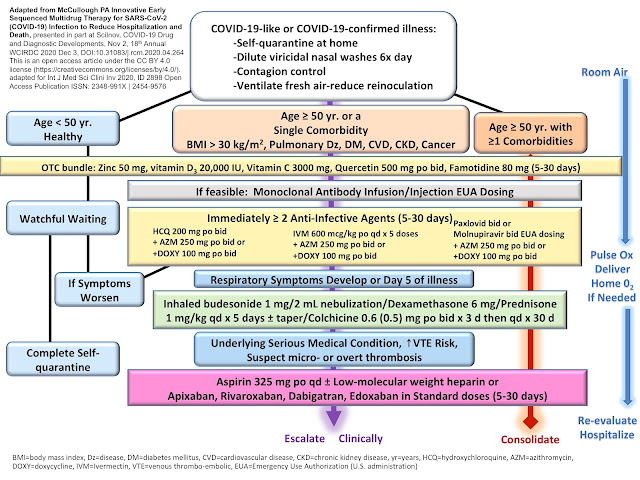
Dr. Peter McCullough is an internist, cardiologist, epidemiologist, a full professor of medicine at Texas A&M College of Medicine in Dallas, USA. He also has a master's degree in public health and is known for being one of the top five most-published medical researchers in the United States and is the editor of two medical journals. McCullough Protocol 2022 Updates:  Double blind randomized controlled trial of saline solution gargling and nasal rinsing in COVID infection (Nov 2023) What really killed COVID-19 patients: It wasn't a cytokine storm, suggests study  (2023) Everyone is familiar with nasal and oral swab testing for COVID-19. It should be obvious the virus is replicating in the nose, and with Omicron, the speed of replication has become much greater than the pr...

Are ‘Turbo Cancers’ Real? Inside the Rise of Early-Onset Cancer (2026)

Image
For years, clinicians and patients have described a disturbing pattern — cancers appearing suddenly, growing at unexpected speed, or diseases thought stable returning aggressively within weeks or months. A sudden rise in younger people with early onset cancers which are more aggressive with more (and unusual) genetic change has been increasingly noted - colorectal, breast and GI tract cancers seem to lead the way. Some called them “turbo cancers”. In oncology, the phenomenon is known as hyper-progression: cancers that accelerate far more rapidly than expected. Early on, these reports were ignored. They surfaced as scattered cases — isolated anecdotes that were easy to dismiss. One of the first to speak publicly was Belgian immunologist Michel Goldman, whose story was published in The Atlantic in 2022. He believed the Covid-19 vaccine may have accelerated his lymphoma. Shortly after vaccination and boosting, he developed swollen lymph nodes, fatigue and night sweats. Imaging revealed ...

Labels

Show more