Posts

Showing posts from May, 2023

Over 300 COVID-19 Papers Withdrawn for Not Meeting Standards of Scientific Soundness

Image
Research journals have withdrawn well over 300 articles on COVID-19 due to compromised ethical standards and concerns about the publications’ scientific validity. Retraction Watch has provided a running list of withdrawn papers on COVID-19 ranging from “Acute kidney injury associated with COVID-19” to “Can Your AI Differentiate Cats from COVID-19?” A total of 330 research papers have currently been retracted. During the pandemic, researchers have compromised on ethical standards and tried to either get more publications approved or to take shortcuts around ethics, senior researcher Gunnveig Grødeland at the Institute of Immunology at the University of Oslo says, after going through the  list  of articles that have been withdrawn, and the reasons for some of them. While it is quite natural for some articles to be updated or changed to be published in a different form, some have been retracted because the researchers did not obtain informed consent during the research. “It will,...

Why a Healthy Lifestyle Saves Lives in a Pandemic: Latest Evidence

Image
After more than three years, the COVID-19 pandemic has officially ended. During a CNN interview, when summarizing the number of deaths (6,921,614) due to COVID-19, chief medical correspondent, Dr. Sanjay Gupta said, “We were not very healthy going into this pandemic.” Many people were far more vulnerable to COVID-19 because of pre-existing conditions or weaknesses when it hit. Should another virus or pathogen strike again, will we be physically prepared to handle it and have a better outcome? As we reflect on our vulnerability, it’s important to consider the ways in which a healthy lifestyle have been proven to strengthen our body’s resilience as we face the future uncertainty of another pandemic. As early as 2020, a paper published in the journal  Clinical Infectious Diseases  investigated the risk factors associated with hospitalization due to COVID-19 based on data from 5416 adults in the United States who were hospitalized with confirmed COVID-19 between March a...

NIH Spends $1 Billion Studying Long COVID

Image
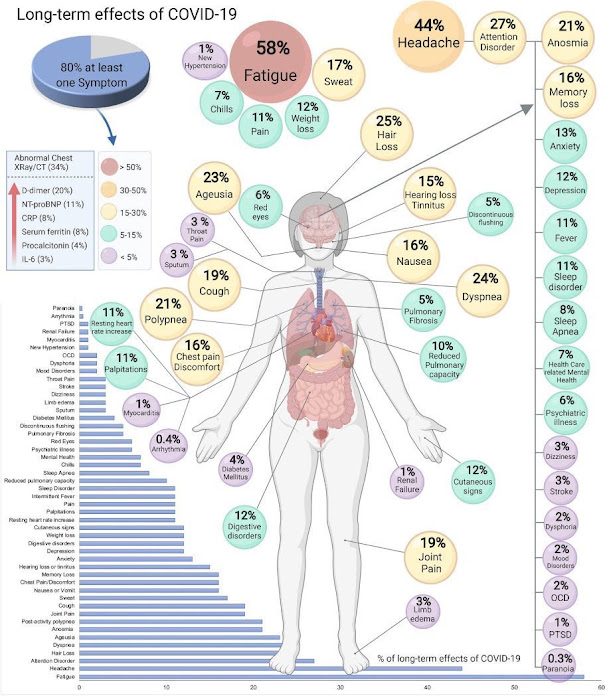
An estimated 7.5% of U.S. adults (1) — that’s 1 in 13 — have symptoms of long COVID, a term used to describe a complex disorder that persists for three or more months after contracting COVID-19. With so many affected, there’s clearly an urgent need to investigate long COVID and how to treat it — and the National Institutes of Health (NIH) did just that. Source: Nature.com In February 2021, Dr. Francis Collins, NIH’s former director, announced that Congress would provide the agency $1.15 billion in funding over four years “to support research into the prolonged health consequences of SARS-CoV-2 infection.”(2) “A diverse team of experts from across the agency has worked diligently over the past few weeks to identify the most pressing research questions and the areas of greatest opportunity to address this emerging public health priority,” he continued. Fast forward more than two years later. What has NIH accomplished with the money? “There’s basically nothing to show for it,” journalists...

Labels

Show more

Archive

Show more