Formerly The COVID Advisor — evidence-based analysis of Long COVID, immune injury, and post-viral disease
Dr Peter McCullough: Spike Protein Exhausts Cardiomyocyte Mitochondria
Get link
Facebook
X
Pinterest
Email
Other Apps
By
Editorial Team
-
One of the most common features of long-COVID syndrome is post-exertional malaise. Even athletes tell me the smallest workout leaves them completely spent, unable to function for several hours.
Nakahara et al demonstrated that the hearts of those vaccinated almost always have abnormal PET scans demonstrating a shift from free fatty acids to 18-flourodeoxyglucose indicative of a fundamental cellular change that has occurred as a result of the vaccine Spike protein. The subcellular organelle responsible for energy generation is the mitochondria.
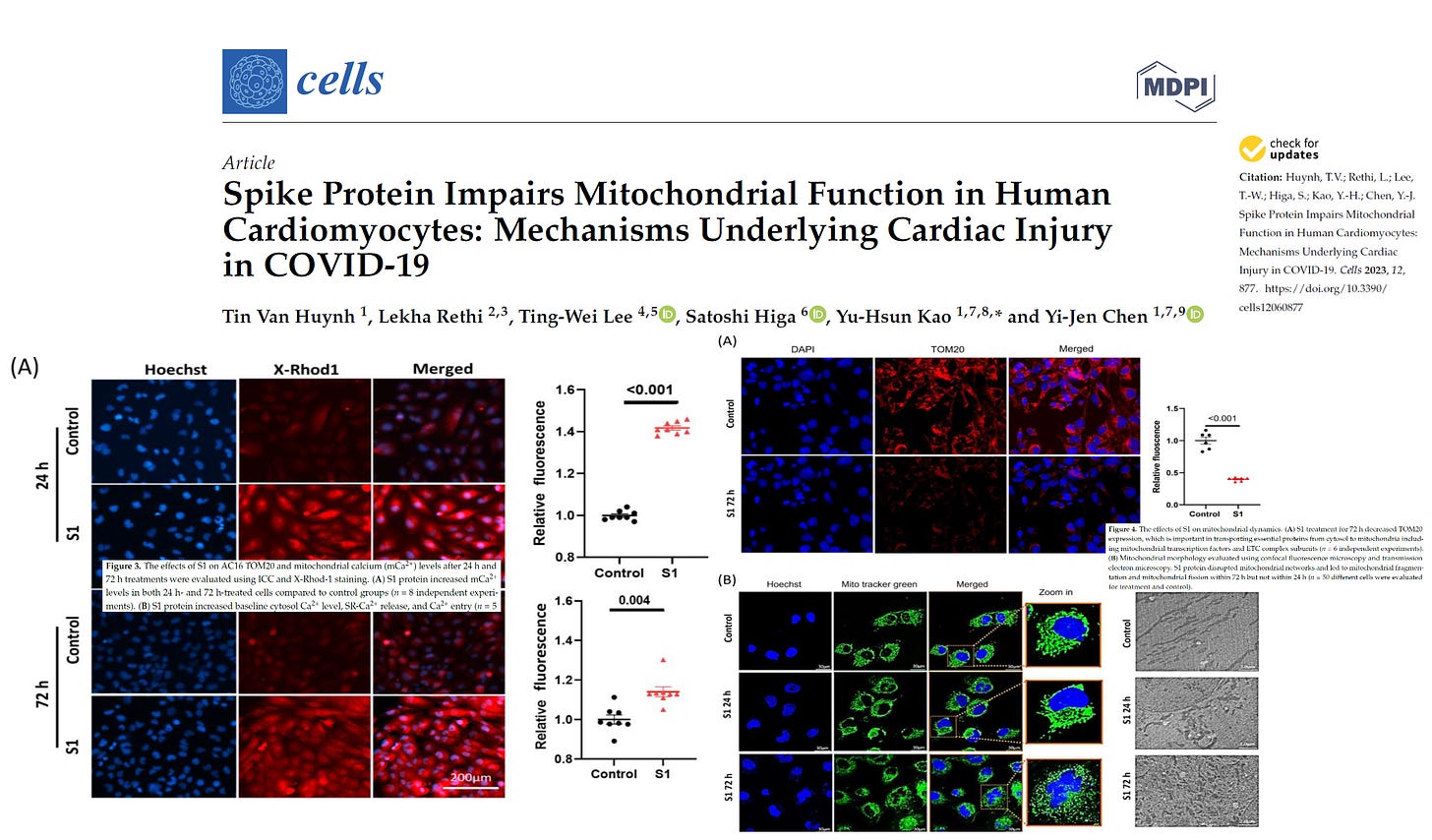
Van Huynk et al have demonstrated in cultured human cardiomyocytes, that the S1 segment of the Spike protein at 72 hours essentially exhausts the mitochondria. These subcellular organelles become fatigued, change their molecular functions, and even begin to undergo fission into fragments. No wonder people feel so bad all over with long-COVID!
Huynh TV, Rethi L, Lee TW, Higa S, Kao YH, Chen YJ. Spike Protein Impairs Mitochondrial Function in Human Cardiomyocytes: Mechanisms Underlying Cardiac Injury in COVID-19. Cells. 2023 Mar 11;12(6):877. doi: 10.3390/cells12060877. PMID: 36980218; PMCID: PMC10046940.
We understand that McCullough Protocol Base Spike Detoxification is essential in treating long-COVID allowing cells to recover normal mitochondrial function. Those with very high Spike concentrations reflected by elevated Spike antibody titers > 1000 units/ml (Roche Elecsys assay) will likely require a full year or more of detoxification.
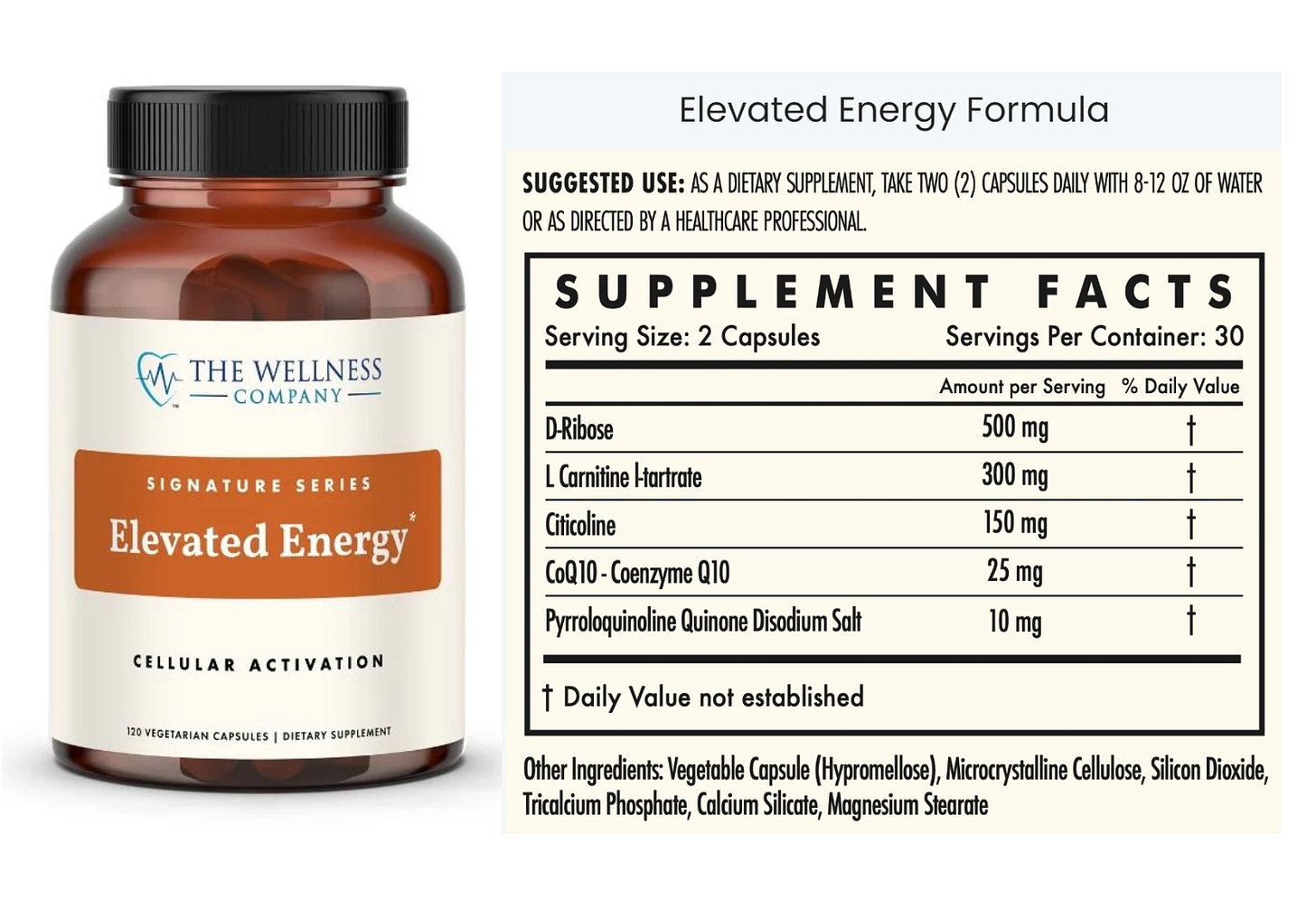
While undergoing this process, a supplement Dr Peter McCullough commonly recommend to address the symptoms of long-COVID including lack of energy and post-exertional malaise is Elevated Energy from The Wellness Company. If well tolerated, two capsules twice a day can be taken as empirically. While no therapeutic claims can be made, it is reasonable to consider this product for a boost in energy that will help on the road to recovery.
Base Spike Detox According to Dr Peter McCullough (in a X/Twitter post): Base Spike Detox is what I am currently using in my practice for those who have had COVID-19 multiple times, one or more of the COVID-19 vaccines, or both and believe persistent SARS-CoV-2 Spike protein could be causing problems in their body. I have arrived, based on the emerging scientific literature (1) and my clinical observation, that three OTC products are essential as a triple base combination: Nattokinase 2000 FU (100 mg) twice a day — take on an empty stomach Bromelain 500 mg once a day — take on an empty stomach Nano/Liposomal Curcumin 500 mg twice a day — take with food How long should I take this? Dr. McCullough recommends a minimum of 3 months , with many patients requiring 6–12 months or longer. Progress can be tracked via a spike protein antibody test (available through Labcorp in m...
An evidence-tiered review of the nattokinase, bromelain and curcumin regimen proposed by Dr. Peter McCullough: what it is, what the research does and does not show, how to use it safely, and how (not) to monitor it. By OneDayMD Editorial Team | Originally published March 2026 | Last updated October 18, 2026 | Sources reviewed through October 2026 | Next scheduled review: April 2027 Quick answer The McCullough Base Spike Detox is a clinician-proposed regimen of nattokinase (2,000 FU twice daily), bromelain (500 mg daily) and nano/liposomal curcumin (500 mg twice daily) intended to break down persistent SARS-CoV-2 spike protein. [1] Laboratory studies show nattokinase can degrade spike protein in cell and test-tube systems TIER 3 [2] [3] , and spike antigen does persist in a minority of people for months after infection TIER 2 [8] . Nattokinase and bromelain affect clotting, and highly bioavailable curcumin has been linked to rare liver injury, so check with a physician fi...
Dr. McCullough explained (1) that the spike protein is an engineered, synthetic molecule roughly 1,200 amino acids long and resistant to degradation by the body’s normal proteases. He described how the protein was modified in laboratory settings (notably at the Wuhan Institute of Virology) to tightly bind to the ACE2 receptor, which is found throughout the body—in the lungs, heart, endothelium, kidneys, and brain. Because this receptor regulates angiotensin metabolism, older individuals with fewer ACE2 sites catabolize the spike less efficiently, leading to worse outcomes. Whether introduced by infection or by genetic‑code‑based vaccines, McCullough asserted, the persistent spike damages tissues directly and through chronic inflammation, micro‑clotting, and autoimmune cross‑reactivity. Spike Protein Protocol Personalizer Based on Dr. Peter McCullough's Base Spike Detox & FLCCC I-Recover Frameworks ⚠ Medical Disclaimer: This tool is...
By OneDayMD Editorial Team · Published September 30, 2026 · Last updated: November 2026 Quick Answer: does anything work for Long COVID? No specific treatment has been proven to work for Long COVID in general. Randomized trials have found no benefit from extended Paxlovid (959 adults), metformin (396) or short-course hyperbaric oxygen (80). Promising but unconfirmed signals include the SIM01 synbiotic (463 people, Hong Kong), physical-activity coaching (50) and the Ultimate Spike Detox. For prevention during acute COVID, Paxlovid (144 people) and metformin show mixed or underpowered results. Care remains individualized and symptom-focused. Medical disclaimer. This article is educational and is not personal medical advice, diagnosis or treatment. Long COVID can overlap with cardiovascular, pulmonary, neurological, endocrine and sleep disorders. Do not start, stop or change pr...
By OneDayMD Editorial Team | Originally published May 2023 | Last updated October 2026 | Sources reviewed through October 2026 Quick Answer The FLCCC/IMA I-CARE Flu and RSV protocol is a home regimen of nasal and mouth antiseptics, supplements and off-label drugs. Most components are supported by laboratory or expert-opinion evidence, not influenza trials. The best-evidenced treatments for influenza are prescription antivirals started early: oseltamivir for hospitalized patients and baloxavir or oseltamivir for high-risk outpatients. Seek care promptly if you are high-risk or struggling to breathe. What changed in this update (October 2026) Fixed copy-paste wording that described the protocol as a COVID-19 guide. Replaced the claim that Tamiflu has “no antiviral properties.” Oseltamivir is a direct-acting neuraminidase inhibitor, and the 2025 paper is in JAMA Ne...
Medically reviewed by: OneDayMD Editorial Team | Last updated: August 2026 Introduction The rapid development and deployment of COVID-19 vaccines have been monumental in combating the global pandemic, saving countless lives and enabling societies to regain a sense of normalcy. Central to the efficacy of many of these vaccines, particularly mRNA and viral vector-based ones, is the spike protein—a key component of the SARS-CoV-2 virus that facilitates its entry into human cells. By instructing the body to produce a version of this protein, vaccines train the immune system to recognize and neutralize the virus without causing illness. However, as vaccination campaigns expanded, so did public curiosity and concern about the spike protein's role, fueled by a mix of scientific complexity, misinformation, and distrust. For years, the public was told that COVID-19 mRNA vaccine components degraded rapidly—within days to weeks. Hulscher, McCullough, and colleagues' ...
Dr. Peter McCullough is an internist, cardiologist, epidemiologist, a full professor of medicine at Texas A&M College of Medicine in Dallas, USA. He also has a master's degree in public health and is known for being one of the top five most-published medical researchers in the United States and is the editor of two medical journals. McCullough Protocol 2022 Update: Azelastine Nasal Spray for Prevention of SARS-CoV-2 Infections: A Phase 2 Randomized Clinical Trial ( JAMA 2025 ) Everyone is familiar with nasal and oral swab testing for COVID-19. It should be obvious the virus is replicating in the nose, and with Omicron, the speed of replication has become much greater than the prior strains of the virus. Thus, there is a wonderful opportunity to reduce viral replication, in fa...
By OneDayMD Editorial Team · Originally published May 2022 · Last updated November 2026 · Sources reviewed through November 2026 Quick Answer Post-COVID-vaccination syndrome (PVS) describes persistent symptoms such as fatigue, exercise intolerance and brain fog that begin after vaccination. It is under active study, but there is no diagnostic test and no treatment proven in randomized trials . The FLCCC/IMA I-Recover protocol is a layered, off-label regimen (time-restricted eating, ivermectin, nattokinase, low-dose naltrexone, supplements) built from proposed mechanisms, clinical observation and patient anecdotes. Evidence-based first steps: see a clinician to exclude treatable causes (myocarditis, thyroid disease, anemia, POTS, sleep disorders), pace your activity, and consider joining a research study. The Independent Medical Alliance (IMA), previously known as the FLCCC, offers a detailed plan called the I-RECOVER protocol. It's a detailed guide for addressing post-...
Dose, blood pressure, carotid plaque, brain health and bleeding risk, graded by evidence tier. By Dr. Frank Yap, MD | Last Updated October 2026 Quick Answer Nattokinase is a clot-dissolving enzyme made by Bacillus subtilis during natto fermentation. Its best-supported human effect is a modest blood pressure drop (about 3 to 5 mmHg systolic) in randomized trials. Plaque regression has been reported only at 6,000 FU/day or higher, in studies that were unblinded or retrospective, while the largest placebo-controlled trial at 2,000 FU/day was null. No trial has measured heart attacks, strokes or deaths. It acts on clotting, so it should not be combined with blood thinners without a clinician, and it must never replace a prescribed anticoagulant. Contents What nattokinase is How it works Human evidence table (CEBM tiers) Blood pressure Plaque and the dose question Cholesterol Brain and stroke research Spike protein claims Natto the food vs. the enzyme Safety, inte...
Immune Systems Advisor · Integrative Medicine White Paper · Open Access Authors: OneDayMD Editorial Team (synthesis and editorial adaptation) · Original protocols: Marik P, Kory P (IMA/FLCCC, 2022–2024); McCullough PA (Cureus, 2023) · Published: March 2023 · Last updated: August 2026 Evidence Tier Key: TIER 1 RCT / systematic review TIER 2 Observational / cohort TIER 3 In vitro / mechanistic TIER 4 Expert consensus / clinical observation ⚠ Medical Disclaimer — Please Read First. This article is for educational purposes only and does not constitute medical advice, diagnosis, or treatment. The protocols described involve supplements with significant anticoagulant activity. Always consult a licensed physician before starting, especially if you take blood thinners, are pregnant or breastfeeding, have a bleeding disorder, or are treating a child. For a virt...



Comments
Post a Comment